
October 19, 2026 · 5 min read
After Effects Carpet Cleaning
How to Prepare for a Carpet Cleaning Appointment
You don't need to empty the room. Pick up anything small enough to carry in one hand, get breakables and cords off the floor, and leave the heavy pieces where they are. The single most useful thing you can do takes thirty seconds: tell us which spots you've already treated, and with what. That one sentence changes how we pre-treat the carpet more than any amount of furniture moving does.
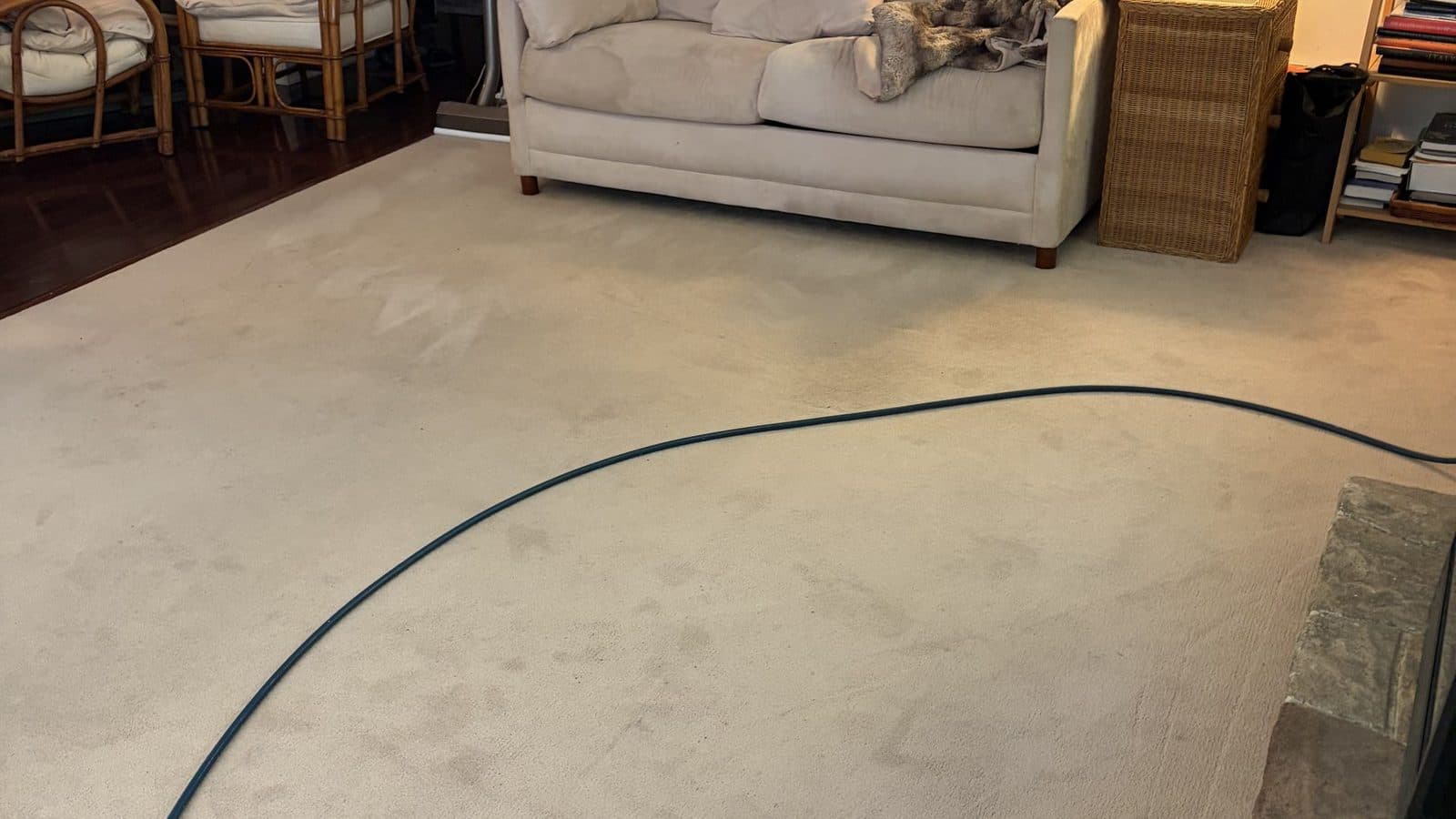
The photo at the top is a real living room on one of our jobs, taken the minute we got set up. The sofa, the wicker hamper and the bookcase are all exactly where the homeowner keeps them, and the hose is already run in from the truck. That's a perfectly normal starting point. You can see the gray traffic pattern across the middle of the room, which is the part we're actually there for.
What to clear and what to leave
Clear the floor of the small things: shoes, toys, baskets, magazine piles, pet bowls, plants on the carpet, anything with a cord. Lamps and floor vases are the ones people forget, and they're the ones that get knocked when a hose comes through the doorway.
Take breakables off low tables and shelves in the rooms we're working in. Nothing has ever gone wrong because a vase was moved out of the way, and plenty has gone wrong because one wasn't.
Leave the sofas, beds, dressers and entertainment centers where they sit. Heavy furniture that never moves usually has clean carpet under it anyway, because nothing walks there. The soil is in the paths people actually use.
Should you vacuum first?
A quick pass helps, mostly by getting hair, crumbs and loose grit up before we start. It's not required and we won't judge the carpet by it.
What a household vacuum can't reach is the deeper layer. At the shore that's mostly sand that has worked down into the backing below where a home vacuum pulls, and getting that out is the job of truck-mounted hot water extraction, not your upright. So vacuum if it's easy. Don't spend your morning on it.
Tell us what's already on the spots
This is the part that actually changes the result. If you've already gone after a stain with a store-bought spot remover, a vinegar mix, dish soap or one of those oxygen cleaners, tell the technician when we walk the room. Leftover soap and chemistry in the pile is one of the main reasons a spot comes back after it looks gone, because the residue keeps attracting soil.
Pet accidents are the same conversation. Point them out, even old ones you think are gone. A urine spot gets an enzyme pre-treatment before extraction, and that only happens if we know where it is. Spots we can't see are spots we treat like ordinary soil.
If you're not sure what something is, say that too. Knowing it's a mystery is still more useful than not knowing it's there.
Pets, kids and parking
Keep pets in a room we aren't working in, or out in the yard, while we're there. It's mainly for their sake: a hose running through the house is interesting to a dog for about a minute and then it's underfoot. Our products are safe for kids and pets once the carpet is dry, so they can have the room back then.
Leave us room to park close to the door we'll use. The truck-mount stays in the van and the hose runs into the house, so a closer spot means less hose and less on your floors. Prop the storm door if you can and we'll take it from there.
The first few hours after we leave
How long the carpet takes to dry depends more on your house than on us. Airflow and humidity move the window, and a closed-up shore house on a humid day dries slower than the same room in October with a window cracked. Run the AC or a fan and it goes faster.
Walk on it in socks or bare feet if you need to, not street shoes. Hold off putting furniture back on wet carpet, and if something heavy has to go back that day, set it on a piece of foil or plastic under each leg so finish doesn't transfer into the pile.
If you've got sand in the house, wait until the carpet is bone dry before you vacuum again. Damp sand clumps and smears.
Related reading:
Want it done right the first time?
After Effects restores carpets and floors across Ocean County and the Shore. Send a photo and get a free, firm quote at your door.
Quick answers
People also ask.
Not the heavy pieces. Leave sofas, beds and dressers where they are and clear the small things off the floor: shoes, toys, lamps, plants, cords and anything breakable on low surfaces. The soil is in the paths people walk, not under furniture that never moves.
A quick pass to pick up hair and loose grit helps, but it isn't required. The deeper soil, including sand that settles into the backing, is what truck-mounted hot water extraction is for, and a household vacuum doesn't reach it.
It's better not to start on them that morning. If you already have, tell the technician what you used. Leftover spot remover and soap in the pile is a common reason a stain wicks back up after cleaning, and knowing what's there changes how we pre-treat it.
Once it's dry. Our products are safe for kids and pets at that point. Drying time depends on airflow and humidity in the house, so running the AC or a fan shortens it.
Keep reading
Nylon vs Polyester Carpet: Which Holds Up and Cleans Better?
Nylon springs back and survives sand and stairs. Polyester shrugs off water spills but crushes and holds oily soil. What each fiber does when we clean it.
How to Deep Clean Luxury Vinyl Plank Floors
Dry soil first, a barely damp mop with a neutral cleaner, and never a steam mop. Why LVP goes cloudy, what damages it at the shore, and how we clean it.