October 12, 2026 · 6 min read
After Effects Carpet Cleaning
Nylon vs Polyester Carpet: Which Holds Up and Cleans Better?
Nylon holds up better and polyester resists water spills better. Nylon is the more resilient fiber, so it springs back in hallways and on stairs and stands up to the sand that gets tracked through every shore house. Polyester is softer and cheaper and shrugs off a lot of water-based spills, but it crushes in traffic lanes and grabs onto oily soil, which is why a polyester hallway goes gray long before the rest of the room. Both clean well. They just fail in different ways, and knowing which one you have changes what we do when we get there.
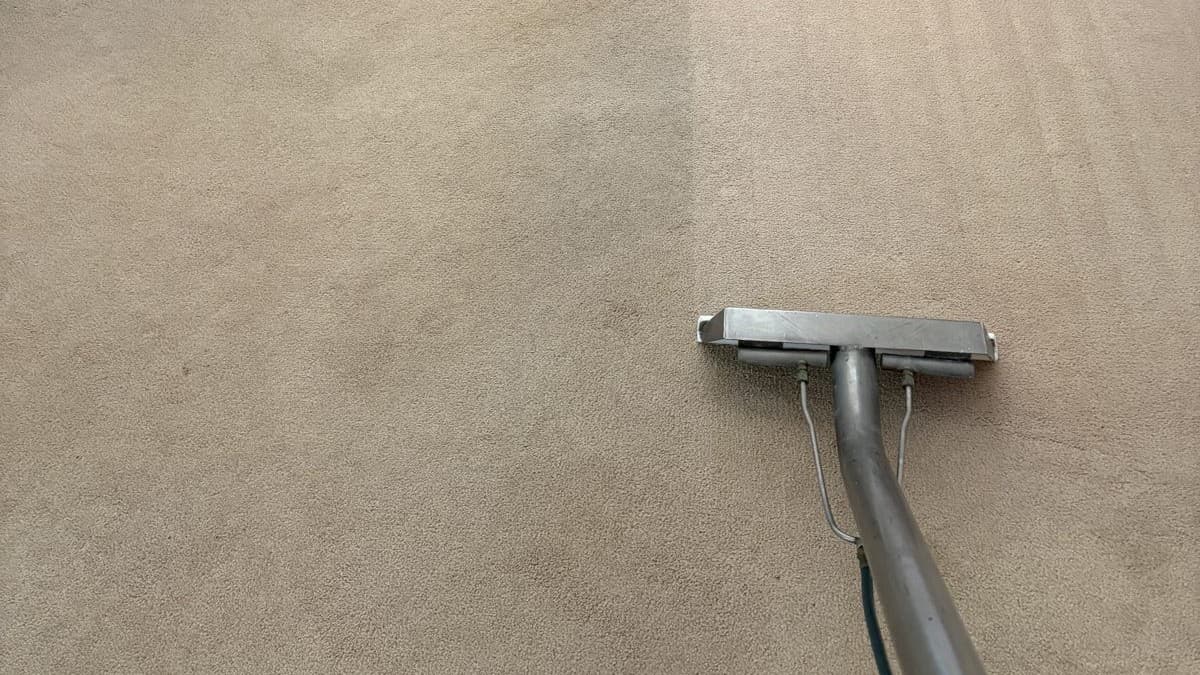
We get asked which carpet is better almost as often as we get asked to clean it, usually by someone about to replace a rental's carpet or someone wondering why their newer carpet looks worse than the old one did. The honest answer is that neither fiber wins everywhere. Here's what we actually see on both of them.
What nylon does well, and where it gets caught out
Nylon's big advantage is resilience. Step on it and the pile comes back up. That matters most in the places carpet takes a beating: the hallway, the stairs, the path from the sliding door to the kitchen. On a busy staircase nylon still looks like carpet after years that would have flattened a softer fiber.
It also handles abrasion better, and at the shore abrasion is the main event. Sand works into the pile and grinds at the fibers every time someone walks across it. Nylon tolerates that grinding better than polyester does.
Where nylon gets caught out is dye. Nylon takes dye easily, which is how it's colored in the first place, and that means some spills act like dye too. Red sports drinks, fruit punch and some juices can permanently stain an unprotected nylon carpet. Most residential nylon leaves the factory with a stain-resist treatment, but that protection wears down over the years and harsh cleaning chemistry wears it down faster. That's one reason we keep our chemistry at the pH the fiber needs and nothing harsher.
What polyester does well, and where it struggles
Polyester repels water. A lot of everyday water-based spills sit on top of a polyester fiber long enough to blot up before they set, which is why it has a reputation as the easy-care choice. It's soft, it holds bright color, and it costs less.
Its weakness is that it doesn't spring back. In a traffic lane the pile crushes and mats, and once it's crushed, cleaning can lift it and make it cleaner but it can't make the fiber young again.
The other problem is oil. Polyester attracts oily soil, the film that comes off bare feet, cooking and everyday traffic. That oil holds dirt to the fiber, and it's why a polyester traffic lane turns gray and dull while the edges of the room still look fine. It cleans up well, but it needs the right pre-treatment to break that oily film loose, not just water and suction.
How each one changes the way we clean it
Both fibers clean well with hot water extraction. The difference is in the details.
On polyester we focus on the oily soil. The traffic lanes get a pre-spray matched to that soil and enough dwell time to work before the wand ever touches them, then a thorough rinse so nothing is left behind to grab fresh dirt. Leftover residue is the main reason carpets get dirty again fast.
On nylon we watch the stain resistance and the dye. We keep the chemistry in the range that won't strip what protection is left, and we test any colored spot before we treat it, because a dye stain on nylon behaves differently from dirt.
On either fiber we check what we're working with before we start. Most of the time the fiber is obvious from the feel and how it behaves. When it isn't, we test it, because the wrong process on the wrong fiber is how carpets get damaged.
Which one we'd put where
If you're replacing carpet in a shore rental, our view is simple. Put nylon on the stairs, in the hallways and in the main living area, where the traffic and the sand are. Polyester is perfectly fine in bedrooms and lower-traffic rooms, where its spill resistance and softness matter more than resilience.
Putting polyester on a rental's stairs is the choice we see regretted most. It looks great at the first turnover and tired by the third season, and no amount of cleaning brings back crushed pile.
Not sure what's already in your house? The original receipt or the spec label is the easiest way to find out. If you don't have either, we can usually tell you on the first visit.
Related reading:
Want it done right the first time?
After Effects restores carpets and floors across Ocean County and the Shore. Send a photo and get a free, firm quote at your door.
Quick answers
People also ask.
It depends on the room. Polyester resists a lot of water-based spills, which helps in a bedroom or playroom. Nylon holds up better in hallways and on stairs where traffic is heavy. For pet accidents specifically, the fiber matters less than getting to the spot quickly and cleaning out what soaked into the padding.
Usually because oily soil or cleaning residue is left behind. Polyester attracts oil, and anything sticky left in the pile grabs fresh dirt. The fix is the right pre-treatment for oily soil and a thorough rinse, not more soap.
Sometimes, but not always. Some red drinks act like dye on nylon, and once the dye has bonded to the fiber, regular cleaning won't lift it. Getting to it fast and blotting, not scrubbing, gives the best chance.
Check the original receipt, the installer's paperwork or a spec label if one was left behind. If none of that exists, a professional can usually tell from the feel and how the fiber behaves, and can test it when it's not obvious.
Keep reading
How to Deep Clean Luxury Vinyl Plank Floors
Dry soil first, a barely damp mop with a neutral cleaner, and never a steam mop. Why LVP goes cloudy, what damages it at the shore, and how we clean it.
Can You Take an Area Rug Somewhere to Be Cleaned?
We clean area rugs in your home, not at a depot. What in-place cleaning reaches, which rugs genuinely need a plant wash instead, and what is going on with the floor underneath.