
August 10, 2026 · 9 min read
After Effects Carpet Cleaning
Why Do Carpet Stains Come Back After Cleaning?
Carpet stains come back after cleaning for two reasons, and neither is a new stain. The first is wicking: as the pad dries from the bottom up over one to three days, leftover moisture carries dissolved stain back up the fibers to the surface. The second is detergent residue that re-attracts soil within weeks.
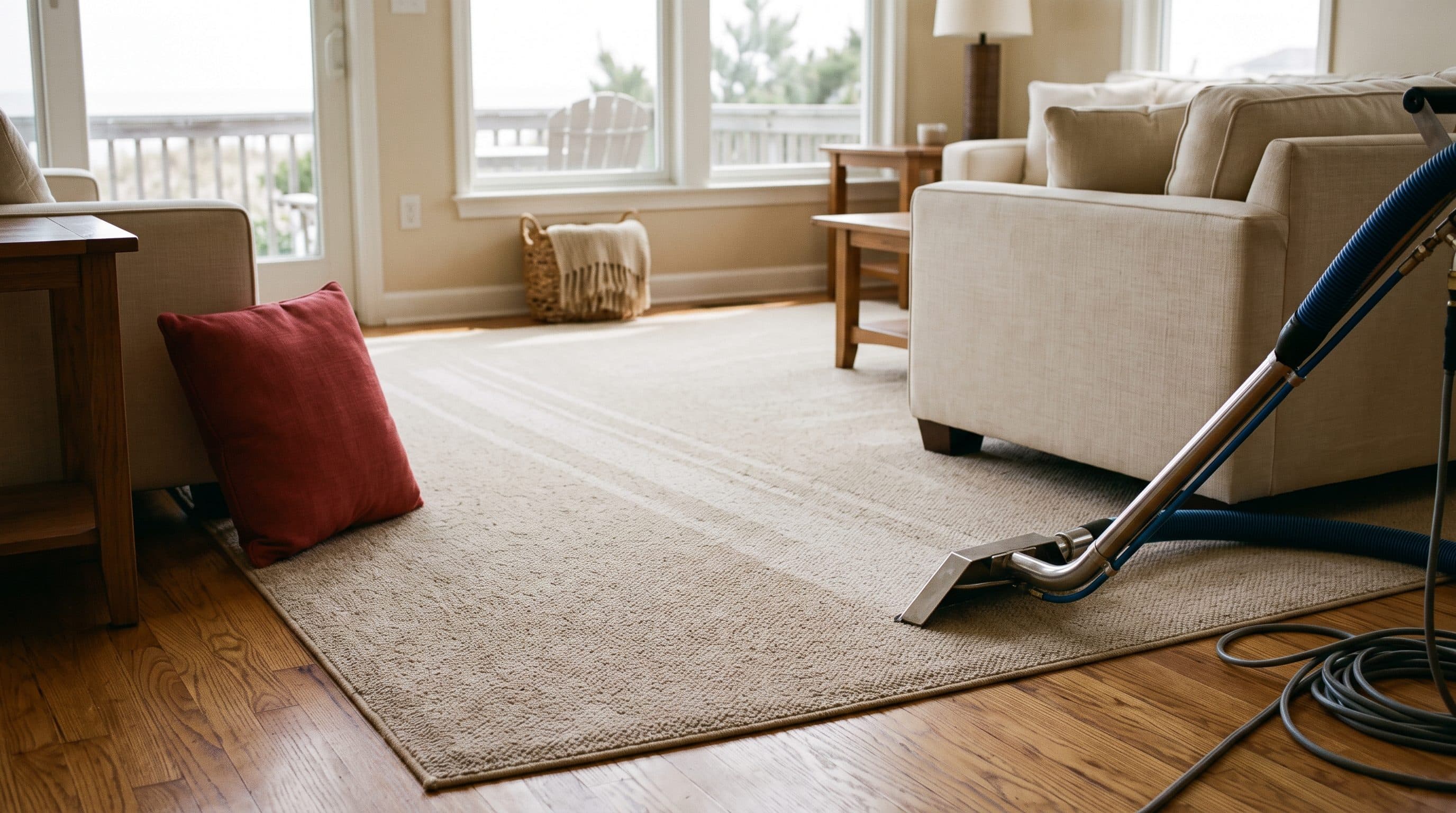
Why do carpet stains come back after cleaning?
They almost never come back. They come up. (Updated August 2026.) When a spot you thought was gone reappears a day or two after a cleaning, the honest explanation is not that the stain returned from nowhere. It is that the stain material was never fully removed from the carpet, and as the carpet dried it traveled back up to the surface where you can see it again. There are two mechanisms behind that, and they are different problems with different fixes: wicking, which is about moisture and depth, and residue, which is about what a cleaner leaves behind. We pull both of these out of shore-home carpets in Barnegat, Waretown and Toms River all season, usually after a rental machine or a spray bottle got the top of the stain and left the rest.
Here is the part most people get wrong before they even call. A stain is not just what you see on the tips of the fibers. On anything more than a light surface spill, the liquid soaked down the pile and into the pad underneath, carrying color, sugar and oil with it. Clean only the top and you have cleaned maybe a third of the problem. The other two-thirds is sitting below, waiting for the one thing that happens to every wet carpet: it dries.
What is wicking, and why does it bring a stain back up?
Wicking is capillary action, the same force that pulls coffee up a paper towel, working in reverse through your carpet. When a spill soaks into the pad, the stain does not stay put down there. As the carpet and pad dry, they dry from the bottom up and from the edges in, and the last of the moisture climbs up through the fibers toward the surface because that is the way out. It carries the dissolved stain with it. So the color you thought you extracted rides that moisture right back to the tips of the pile and re-deposits there, usually one to three days after the cleaning, right as everything finishes drying.
That timing is the tell. A stain that shows up hours or a day after a cleaning, in the same footprint as the original, is not a coincidence and it is not a bad cleaner smearing it around. It is wicking, and it means moisture reached deeper than the cleaning recovered. It is worst on the exact spills that soak deepest, red drink, pet accidents, coffee, anything that went in wet and sat, and it is worse here on the shore than inland, because bay humidity slows drying and gives the moisture more time to travel up the fiber before it evaporates.
The reason it beats a home cleaning specifically is that a wand or a rental machine puts a lot of water down and takes very little back up. The pad ends up soaked. A soaked pad is a reservoir, and everything it holds gets a slow ride to the surface over the next few days. The stain did not survive the cleaning. It got refilled from below.
Why does a cleaned spot attract dirt faster than the carpet around it?
Because of detergent residue, and it is the second reason a stain seems to come back, on a slower clock than wicking. Soap left in a carpet is sticky. When a rental machine or an over-the-counter spot cleaner leaves detergent in the pile because its suction cannot pull the solution back out, that residue stays behind and stays tacky. Every bit of dry soil, dust and grit that crosses that spot over the next couple of weeks sticks to it. So the spot re-grays, faster than the carpet around it, and it looks like the stain is bleeding back when it is really fresh dirt glued to old soap.
This is why a spot you scrubbed with a foaming cleaner is often dingier a month later than it was before you touched it. The cleaner did not rinse. Foam and spray products are built to be left in, and a rental machine does not have the vacuum lift to flush them, so you traded one stain for a permanent soil magnet in the same spot. The fix is not more cleaner. More cleaner is more residue. The fix is flushing the residue out with enough clean water and enough suction to actually recover it, which is a different machine than the one that caused it.
What does a rental machine leave behind in the pad?
Water, detergent and most of the stain, which is exactly the combination that produces both wicking and re-soiling. A grocery-store rental unit runs lukewarm water and the suction of a household vacuum. It is good at putting solution down and poor at taking it back, so on any real stain it wets the pile, wets the pad, and recovers only a fraction of what it laid down. What stays behind is a damp, soapy, still-stained pad.
On a humid shore day that leftover moisture is its own second problem. A pad that stays wet for a day or two in bay-air humidity is how a musty smell starts, on top of the stain that is about to wick back up. So the rental did not just fail to remove the stain. It set up the two conditions, saturation and residue, that guarantee the stain reappears. That is not a knock on anyone who tries it. It is a limit of the equipment. There is no rental you can hire that recovers water the way a truck-mounted system does.
Why is extraction volume the whole difference?
Because removing a stain for good is not about what you put down, it is about what you pull back up, and recovery is the one thing a weak machine cannot do. Our truck-mounted system heats the water far past what a rental holds, which re-dissolves the stain material sitting in the pile and pad, and then it recovers the large majority of that water in the same pass, carrying the dissolved stain up and out into a tank on the van instead of leaving it in the carpet to dry back in. Getting a carpet wet is easy. Getting the dirty water back out is the entire job, and it is the half a rental skips.
That recovery is what kills both failure modes at once. Pull the water out and there is no reservoir left in the pad to wick a stain back to the surface, so the spot does not reappear on day two. Rinse and recover the solution and there is no sticky detergent left in the pile, so the spot does not re-gray in three weeks. The same principle solves both, and it is why a professional extraction holds where a rental keeps handing the stain back to you. When we leave a Manahawkin or Toms River carpet it is damp to the touch, not soaked, and it dries in four to eight hours with the moisture and the stain in our tank, not in your floor.
How do you stop a stain that has already come back twice?
Work it in this order, whether you are handling a fresh reappearance yourself or getting the spot ready for us to extract:
1. Stop adding cleaner. Every spray of foaming spot cleaner adds residue to a spot that already has too much. If the stain keeps coming back, more product is feeding the problem, not fixing it.
2. Blot, do not scrub. Press a clean white towel straight down on a reappeared spot to lift what has wicked to the surface. Scrubbing frays the fiber and drives residue deeper.
3. Rinse with plain water, then recover what you can. Dampen a towel with clean water, blot the spot, and press a dry towel down hard to pull the moisture back. You are flushing residue and recovering water, which is the whole idea in miniature. Then weigh the spot down with a stack of dry towels and something heavy overnight, so any remaining wicking pulls up into the towel instead of back into the pile.
4. Dry it fast. Put a fan on the spot and move air across it. The quicker the pad dries, the less time moisture has to carry stain up to the surface.
5. If it comes back a third time, stop and call. A stain that returns twice reached the pad, and a spot fix from above cannot recover what is down there. That one is a sub-surface extraction job, not a stronger bottle of cleaner.
That last step is the honest line. A spot that has wicked back two or three times is telling you the contamination is in the pad, not the pile, and no amount of towel work from the top reaches it. At that point the smart money is one real extraction, not a fourth bottle of spot cleaner that leaves the spot dingier than when you started.
Have a stain that will not stay gone?
If a spot keeps coming back a day or a week after you clean it, it is wicking or residue, and both come out with heat and real suction that reach the pad. After Effects Carpet Cleaning is owner-operated, based in Barnegat and working the whole Ocean County shore, from Waretown and Manahawkin down the LBI corridor and up through Toms River, Brick and Lakewood, plus the Monmouth and Mercer County towns on the service-areas pages. Our carpet cleaning service covers full truck-mounted extraction, and upholstery cleaning runs the same way for furniture a stain has settled into. Send a photo of the spot for a firm price at the door, with no travel charge anywhere on the route. Get a free estimate through the contact form, or call or text us at 609-342-3183.
Related reading:
Want it done right the first time?
After Effects restores carpets and floors across Ocean County and the Shore. Send a photo and get a free, firm quote at your door.
Quick answers
People also ask.
That is wicking. The spill soaked into the pad, and cleaning only removed what was near the surface. As the carpet dried from the bottom up over the next one to three days, leftover moisture carried the dissolved stain back up the fibers to the surface. It is not a new stain, and it is not a bad cleaner. It means the moisture reached deeper than the cleaning recovered.
If it reappears in the same footprint within a few days of cleaning, it is the original wicking back up, not a new spill. New stains land in new places and usually have an obvious cause. A reappearing spot in the exact old outline, a day or two after the carpet was cleaned, is the deep part of the stain riding the last of the drying moisture to the top.
Detergent residue. Rental machines and foaming spot cleaners leave soap in the pile because their suction cannot flush it back out, and that residue stays sticky. Dry soil and grit that cross the spot stick to it, so it re-grays faster than the carpet around it. Adding more cleaner adds more residue. The fix is flushing the soap out with clean water and strong suction.
Sometimes, on a light one. Blot with a clean white towel, rinse with plain water, blot again, then weigh a stack of dry towels over the spot overnight so the wicking pulls up into the towel instead of the pile, and run a fan to dry it fast. What that cannot do is recover contamination that reached the pad. If the spot comes back a third time, it is a pad-deep problem that needs sub-surface extraction.
Yes, because truck-mounted extraction removes the two things that make a stain reappear. It heats the water to re-dissolve the stain in the pile and pad, then recovers the large majority of that water in the same pass, so there is no soaked pad left to wick a stain up and no detergent residue left to attract soil. The carpet is left damp, not soaked, and dries in four to eight hours.
Yes. After Effects is owner-operated out of Barnegat and covers the whole Ocean County shore, including Waretown, Manahawkin, the LBI corridor, Toms River, Brick and Lakewood, plus Monmouth and Mercer towns, with no travel charge on the route. Send a photo of the spot for a firm price at the door, or call or text 609-342-3183 for a free estimate.
Keep reading
How to Deep Clean Luxury Vinyl Plank Floors
Dry soil first, a barely damp mop with a neutral cleaner, and never a steam mop. Why LVP goes cloudy, what damages it at the shore, and how we clean it.

Can You Take an Area Rug Somewhere to Be Cleaned?
We clean area rugs in your home, not at a depot. What in-place cleaning reaches, which rugs genuinely need a plant wash instead, and what is going on with the floor underneath.