October 5, 2026 · 8 min read
After Effects Carpet Cleaning
How to Deep Clean Luxury Vinyl Plank Floors
Dry soil first, then a damp mop with almost no water and a neutral cleaner, and never a steam mop. That is the whole answer for luxury vinyl plank, and the reason most LVP in Ocean County looks dull is not that it is dirty. It is that somebody has been mopping it with something that leaves a film, and the film is what you are looking at. Cleaning that off is a different job from mopping, and it is most of what our crew actually does on these floors.
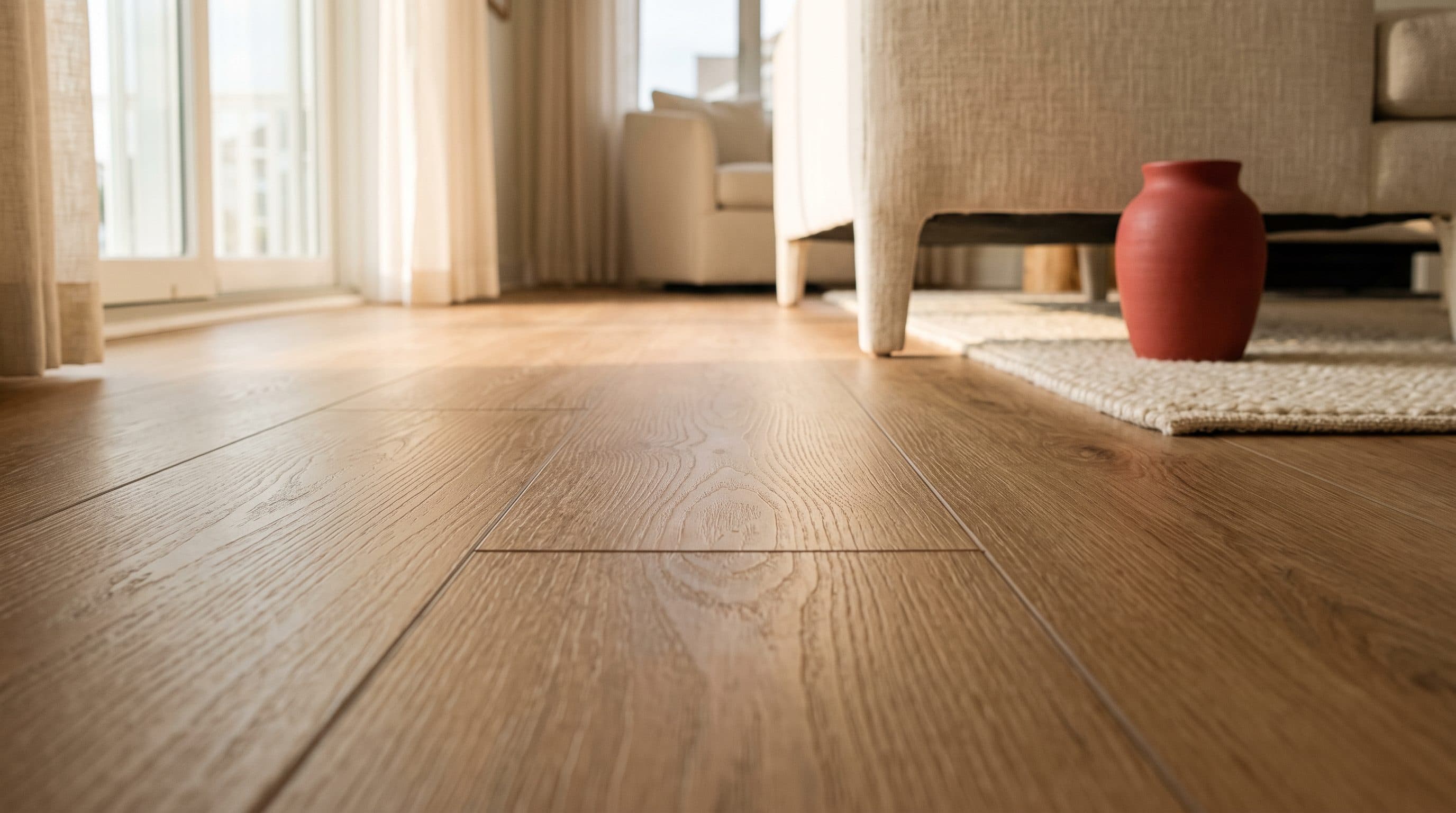
We get called for LVP more every year, because it went into a lot of shore houses and rentals in the last decade and the first wave of it is now 8 or 9 years old. Here is how it works and what wrecks it.
Why your LVP looks cloudy
Nine times out of ten it is residue, not wear.
Vinyl plank has a clear wear layer on top, usually somewhere between 6 and 20 mil on residential product. That layer is smooth and it is not porous, so anything you leave on it stays on it. Mop with a cleaner that has soap, gloss enhancers, oils or vinegar in it and a little gets left behind every time. Twenty passes later there is a haze, it holds footprints, and it feels slightly tacky in bare feet.
People react by mopping more, usually with more product, which is the opposite of the fix.
The tell is simple. Wipe a small patch with plain warm water and a clean microfiber and let it dry. If that patch comes up clearly brighter than the floor around it, you have residue. If it looks the same, you are looking at wear or at scratching in the wear layer, and that is a different conversation.
What actually damages it
Three things, and only one of them is about cleaning.
Grit. Sand is the big one down here. It is abrasive, it gets tracked in from the beach and off the parking lots all summer, and it scratches the wear layer every time somebody walks on it. On a rental near the water we would rather you vacuum daily in season and mop once a week than the other way around.
Standing water. LVP itself does not care about water, but the seams and the edges do, and so does whatever is under it. Water that sits in a seam works its way to the subfloor, and on a click-lock floating floor it can lift an edge. A soaked mop is the most common way this happens.
Heat. This is the one people do not expect. A steam mop puts hot vapor into the seams and at the glue line, and on glue-down plank it softens the adhesive. On floating plank it can make the board edges cup. Manufacturers are mostly explicit about this in their care sheets and most warranties exclude it. We will not run steam on a vinyl floor, and we would not let anyone else either.
How we clean it
The order matters more than the product.
It starts dry. We vacuum the whole floor with a hard floor head, no beater bar, and get the edges and the transitions where the sand collects. Skip this and go straight to wet, and all you are doing is making mud and pushing it into the bevels.
Then the residue comes off, if there is any. That is a neutral pH stripper suited to vinyl, worked in sections, agitated with a soft brush or a floor machine with a white pad, and picked up wet rather than left to dry. This is the step that gets the floor back, and it is the step a mop cannot do.
Then the bevels. The micro-bevel between planks is the whole reason these floors look textured, and it is also a trough that collects everything. On a detailed clean we run those with a brush. This is slow and it is where the difference shows up in photographs.
Rinse, extract, and dry. On vinyl we use very little solution and pull most of it back, because the goal is a floor that is dry in minutes rather than one that sits wet while water finds the seams.
What you should do between visits
Keep it boring and the floor lasts.
Vacuum or sweep more than you mop. Grit does the damage; most floors need mopping far less often than people think.
Use a neutral pH cleaner made for luxury vinyl, and skip anything that says shine, polish, oil soap or wax.
Wring the mop until it is barely damp. If you can see wet footprints behind you, there is too much water on the floor.
Put a proper mat at every exterior door, and a second one inside. At the shore this is most of the battle.
Felt pads under furniture, and lift rather than drag anything heavy.
Skip the steam mop entirely, whatever the box claims.
Do not use a wax or an acrylic polish to bring back the gloss. It will look good for a month and then it yellows at the traffic lanes, and getting it off is a real job that costs more than the cleaning did.
When it is worth having it done professionally
If the floor has haze you cannot wipe away, if the bevels are packed, if it is a rental between tenants, or if you are selling the house. Those are the four where the difference is obvious.
If the wear layer itself is scratched through, we will tell you that cleaning is not going to fix it. There is no refinishing a vinyl floor the way there is with wood, so at that point you are looking at replacing planks or living with it, and we would rather say so than take money for a clean that cannot change anything. The same honesty applies on the wood side, which we wrote up separately.
Most of the LVP we see in Barnegat, Waretown, Manahawkin and the LBI rentals is in better shape than the owner thinks. It is almost always residue and sand, and both come off.
Related reading:
Want it done right the first time?
After Effects restores carpets and floors across Ocean County and the Shore. Send a photo and get a free, firm quote at your door.
Quick answers
People also ask.
Almost always cleaner residue rather than wear. The wear layer on LVP is smooth and not porous, so anything left behind stays on the surface, and cleaners with soap, gloss enhancers, oils or vinegar leave a little every time. Test it by wiping a small patch with plain warm water and a clean microfiber and letting it dry. If that patch comes up brighter than the floor around it, it is residue and it comes off.
No, and this is the one we feel strongest about. Steam drives hot vapour into the seams and down to the glue line, which softens adhesive on glue-down plank and can cup the board edges on a floating floor. Manufacturers are mostly explicit about it in their care sheets and most warranties exclude steam damage. We will not run steam on a vinyl floor.
Sand, dust and dried cleaner residue. The micro-bevel is what makes these floors look like real plank, and it is also a trough that a flat mop passes straight over. On a detailed clean we brush those grooves out section by section. It is slow, and it is where the before and after is most obvious.
Less often than most people do, and vacuumed far more often. Grit is what actually damages the floor, so dry soil removal is the work that matters. In a shore house in season we would rather see it vacuumed daily and mopped once a week than mopped every other day with a wet mop.
Not the way wood can. There is no sanding and refinishing a vinyl floor, so if the wear layer itself is scratched through, cleaning will not change it and the options are replacing planks or living with it. We would rather tell you that than take money for a clean that cannot fix the problem.
No. An acrylic polish or wax looks good for about a month, then it yellows in the traffic lanes and holds dirt. Removing it afterwards is a real job that costs more than the cleaning would have. If the floor has lost its look, the cause is usually residue, and taking residue off is what restores it.
Keep reading
Can You Take an Area Rug Somewhere to Be Cleaned?
We clean area rugs in your home, not at a depot. What in-place cleaning reaches, which rugs genuinely need a plant wash instead, and what is going on with the floor underneath.
Tile and Grout Cleaning: What a Professional Job Actually Removes
Grout is not dirty on the surface, it is dirty inside. Why scrubbing stops working, what heat and pressure reach that a brush cannot, and when grout is failing rather than soiled.