
September 14, 2026 · 9 min read
By Peter De Leon, After Effects Carpet Cleaning
Refinish or Replace Hardwood Floors: How to Read Yours
Refinish or replace hardwood floors comes down to one measurement: how much wood is left above the tongue. Solid hardwood starts around 3/4 inch thick and can be sanded four to six times across its life, so most floors people call dead are only worn finish sitting over good wood. Replace when the boards are cupped past flattening, sanded down to the tongue, water-rotted, or chewed through the wear layer. Engineered floors flip the math, because you are refinishing a veneer measured in millimeters instead of a solid board. Updated September 2026.
The wear layer is the whole decision
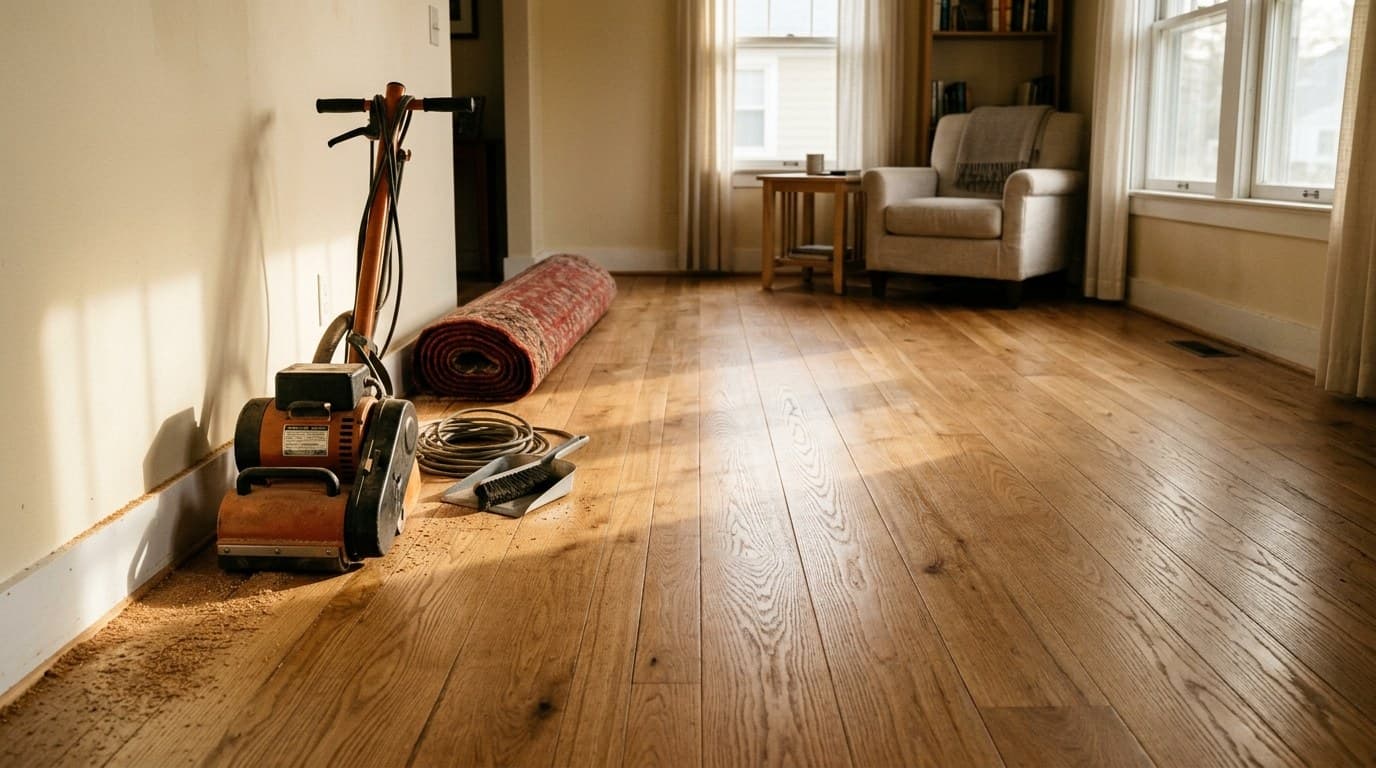
The only number that decides refinish or replace is the wear layer, the wood sitting above the tongue-and-groove joint. On a solid strip floor that started at 3/4 inch, roughly 1/4 inch of that sits above the tongue, and once a sander cuts down to the tongue the floor is finished for good. Everything else, the color, the scratches, the gray dullness, is cosmetic and comes off in the sanding.
I am Peter De Leon, and I run After Effects out of Barnegat, working floors from Waretown and Forked River up through Toms River and Brick and out to the LBI corridor. The first thing I do on a hardwood call is find that number, because a beautiful stain plan means nothing if there is no wood left to hold it. A floor with a quarter inch of good wood over the tongue has decades in it. A floor sanded three times already might have one pass left, or none.
How to find out how much wood you have left
You do not guess at the wear layer, you look at an exposed edge. The cleanest read on any job is to pull a floor register or lift the threshold where the wood meets tile or carpet, because the cut end of a board there shows the full thickness and exactly how much sits above the tongue. I carry a thin ruler and measure it right there.
If the boards show three-quarter-inch stock with a healthy quarter inch above the joint, we sand with room to spare. If the tongue is already close to the surface, we screen and recoat instead of a full sand, or we talk about replacement. Face-nail heads coming up at the surface, boards that flex underfoot, and a hollow sound are the other tells. Count the past refinishes too, because each full sanding takes off about 1/32 inch, so a floor sanded four times has already given up an eighth of an inch of its life.
Damage that sands out, and damage that does not
Most of what makes a floor look ruined sands out completely. Surface scratches, gray weathered finish, pet-nail scuffs, sun-faded lanes, cupping that has flattened back down, and old wax buildup all disappear once the floor is cut to bare wood at 36 grit and worked up through 60, 80 and 100.
What stays is anything that changed the wood itself. Deep gouges below the sanding depth, boards split down the grain, black water stains soaked into the fiber, and dye loss where a rug or pet urine bleached the wood past the finish are structural, not cosmetic. Some of those I fix by cutting in a few replacement boards and blending the stain across them. When a whole room carries black staining or rot, replacement is the honest answer, and I say so at the quote rather than sand a floor that was never coming back.
Engineered floors change the answer
Engineered hardwood changes the whole calculation, because you are not refinishing a solid board, you are refinishing a thin veneer of real wood glued over plywood. That veneer, the wear layer here, runs anywhere from under 1mm to about 6mm. A 2mm veneer gives you one light sanding at most across its life, sometimes none at all, and a floor under 2mm should never meet a drum sander.
Sand through the veneer and you hit the plywood core, and that section is done, with no refinishing it back. For thin engineered floors the right move is usually a screen and recoat, which scuffs the existing finish and lays a fresh coat without cutting into the wood. Engineered is common in shore homes for a real reason: the layered core barely moves with our humidity swings. It simply does not give you the refinishing headroom a solid floor does, so on engineered the answer tips toward recoat or replace far sooner.
Water damage, pet stains and cupping: the three hard cases
Three problems come up on nearly every shore hardwood call, and each one has a line where refinish becomes replace. Cupping, where the board edges rise higher than the center, comes from moisture underneath, a crawlspace, a slow leak, a wet basement. The trap is sanding a cupped floor flat while it is still wet, because when the wood finally dries the middle drops and you get the reverse, crowned boards. I check moisture first and want the boards within about 2 to 4 percent of the subfloor before any sanding starts.
Pet urine is the second case. It soaks past the finish into the fiber and leaves black staining and a smell no sander reaches, so those boards get replaced rather than refinished. Standing water and rot from a dishwasher line or a slider that leaked for years is the third, and rotted boards are structural, so they come out. Catch cupping early and the floor often flattens on its own once the moisture source is fixed, and that is the whole difference between a recoat and a full replacement.
What a refinish week looks like in an occupied house
A full refinish on a typical living room and hall runs three to five days, and it is dusty, loud work you plan the week around. Day one is sanding, three passes of grit, and even with a vacuum-assisted sander there is fine dust that keeps settling for a day. Then comes staining if you are changing the color, and after that two or three coats of finish with drying time between each.
You cannot walk a floor while it cures, so I sequence rooms so you are never shut out of the whole house at once. With a water-based finish you are usually back on the floor in socks the same day the last coat goes down, and moving furniture in around day three. Oil-modified needs longer, closer to a week before heavy furniture and rugs go back, because it cures slow even though it feels dry to the touch fast. Plan the job for a stretch when the house can air out with windows open and nobody needs that room.
Where the finish choice changes how long it lasts
The finish you pick decides how the floor wears and how easily it gets touched up years down the road. Water-based polyurethane cures hard and clear, keeps the wood close to its raw color, and lets furniture back fastest, which is why I lean toward it in a busy house with pets and kids. Oil-modified polyurethane gives that warm amber depth on oak and holds up well, but it ambers further with age and cures slower.
Penetrating hardwax oil is the third road. It soaks into the wood instead of laying a film, so a worn spot can be cleaned and re-oiled in place without sanding the whole room, though it asks for more upkeep and shrugs off standing water less. There is no single best one. In a shore rental that turns over every week I want the fastest, hardest cure. In a formal room that rarely gets abused, the finish that reads richest wins, and we pick it at your house against your boards and your light. Send a photo through the free estimate form or call or text After Effects at 609-342-3183, and we will read the wear layer before anyone quotes you a whole new floor.
Related reading:
Want it done right the first time?
After Effects has restored carpets and floors across the Shore for over 30 years. Send a photo and get a free, firm quote at your door.
Quick answers
People also ask.
Usually, yes. Graying and scratches are almost always dead finish, not dead wood, and they sand out to bare board. The real limit is the wear layer above the tongue: a solid 3/4-inch floor can be sanded four to six times over its life, so an old floor with a quarter inch of wood left has plenty of refinishes in it. We read that thickness at an exposed edge before quoting.
A solid 3/4-inch floor holds roughly four to six full sandings across its life, because each pass removes about 1/32 inch and you have around a quarter inch of usable wood above the tongue. Once the sander reaches the tongue, the floor is done and has to be replaced. A screen and recoat, which does not cut into the wood, can be repeated many more times than a full sand.
Sanding is one step inside a refinish. A full refinish means sanding the floor to bare wood, repairing what needs it, staining to the tone you want, and sealing with two or three coats of finish. A screen and recoat skips the deep sanding, scuffs only the existing finish, and lays a fresh coat, which protects the floor without spending any of the wear layer.
Sometimes, and it depends entirely on the veneer thickness. Engineered wear layers run from under 1mm to about 6mm. A 2mm veneer takes one light sanding at most, and anything under 2mm should only ever be screened and recoated, never drum-sanded, or you cut through to the plywood core. Thicker 6mm engineered can be refinished a few times like a thin solid floor.
Refinish if the boards are solid and there is a quarter inch of wood above the tongue, even when the surface looks gray, scratched, or dull. Replace when boards are rotted, split, black-stained from pet urine or standing water, cupped past flattening, or already sanded down to the tongue. The honest check is measuring the wear layer at a heat register or threshold, not judging by how bad the surface looks.
A typical living room and hallway runs three to five days, including sanding, optional staining, and two or three coats of finish with cure time between. Water-based finishes let you walk the floor the same day and move furniture back around day three. Oil-modified takes closer to a week before heavy furniture and rugs return.
Keep reading

The Letter on Your Couch Tag Decides How It Can Be Cleaned
Upholstery cleaning codes on the fabric tag, W, S, WS and X, decide whether your sofa takes water, solvent only, or vacuuming alone. Here is each one.

What Professional Upholstery Cleaning Actually Does to a Couch
Professional upholstery cleaning is not carpet cleaning on furniture. It pulls embedded soil out of the cushion fill a vacuum never reaches, using controlled heat and low-moisture extraction so the frame never gets soaked. Here is what actually happens.