
September 21, 2026 · 8 min read
By Peter De Leon, After Effects Carpet Cleaning
Tile and Grout Cleaning: What a Professional Job Actually Removes
A professional tile and grout clean pulls soil out of the grout itself, not off the top of it. Grout is porous, so years of mop water push dirt down into it and then leave it there. Heat, pressure and immediate extraction reach into that pore structure, which is the part a brush and a bucket physically cannot do. What it will not do is fix grout that has failed, and telling those two apart is most of the job.
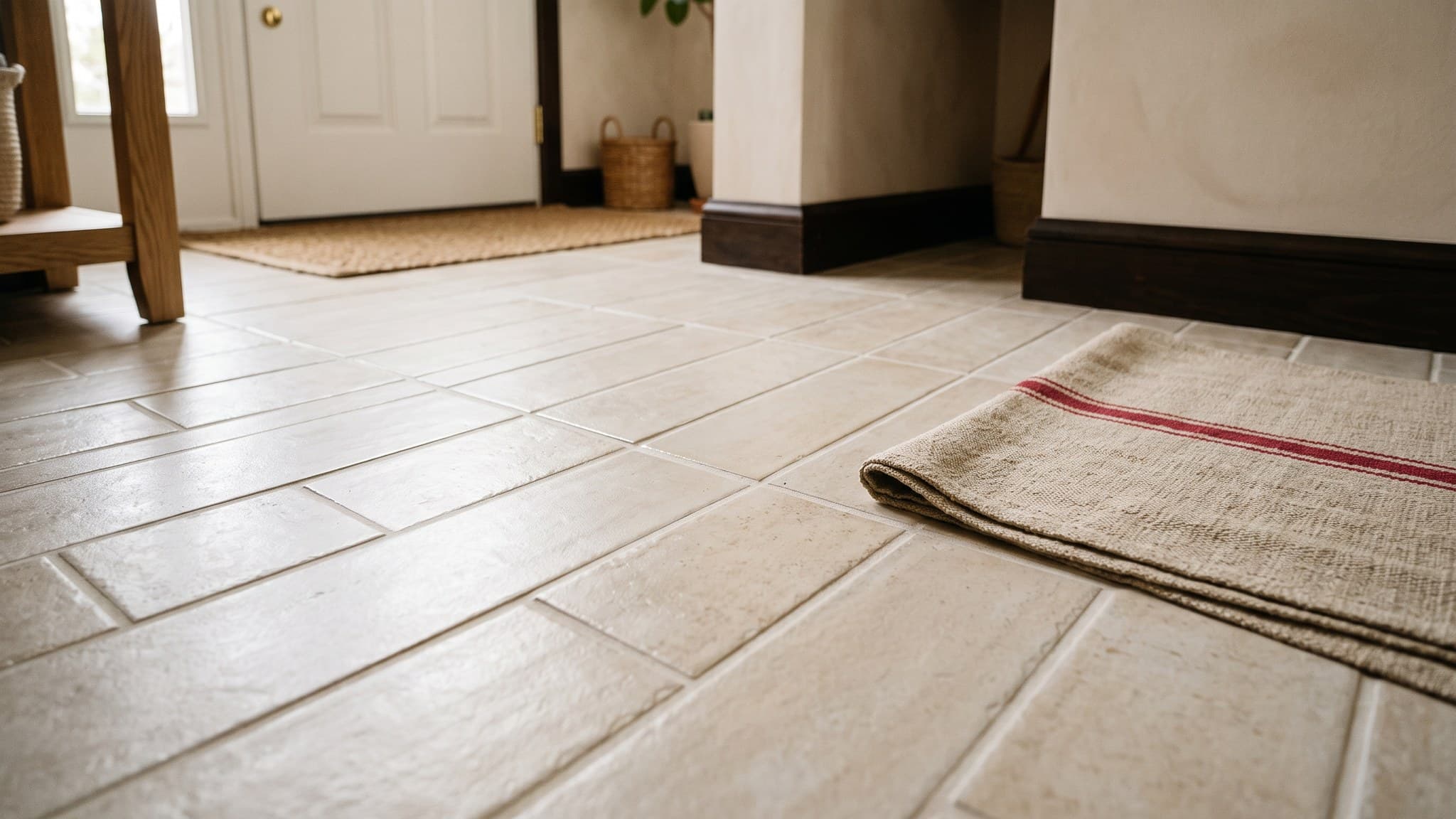
Grout Goes Dark From the Inside
This is the thing that surprises people most, so it is worth starting here. Grout is not dirty on the surface, it is dirty inside. That is why the brush stops working about 2 inches in.
Cement grout is porous by nature. It has an open pore structure, and every time a floor gets mopped, the mop lifts soil off the tile, suspends it in the water, and then that dirty water runs into the lowest point on the floor, which is the grout line. The water evaporates. The soil stays. Do that weekly for 6 or 7 years and the grout is not stained, it is loaded.
So the darkening is usually uniform along the lines rather than blotchy, and it is worst in the traffic lanes and around the kitchen sink. A blotchy dark patch is a different problem, usually moisture or mildew, and it gets handled differently.
What a Home Scrub Actually Accomplishes
It works, and then it stops working, and people assume they are doing it wrong. They are not.
A brush and an oxygen cleaner will lift what is sitting in the top fraction of the pore. You will see real improvement on the first pass, especially on lighter soil. What happens next is that you run out of mechanical reach. The bristles cannot get down into the pore, and the cleaner you just applied has nowhere to go, so a lot of it dries back into the joint carrying the soil with it.
That is also why grout often looks worse a week after a heavy home scrub than it did the day of. Nothing was removed from the floor. It was loosened, redistributed and left to dry.
What Heat and Pressure Do That a Brush Cannot
Our tile work runs off the truck mount, same machine that runs the carpet side, and it comes down to three things happening at once.
Heat softens and breaks the bond between the soil and the cement. Pressure drives clean solution into the pore and flushes the soil up out of it. And a closed extraction tool pulls the dirty solution off the floor in the same motion, so it never gets a chance to settle back in. That last part is the one that matters most and the one a rental machine does worst.
Before any of that, the joints get a pre-spray and real dwell time. Cleaner needs minutes to work, not seconds. If someone sprays and immediately starts extracting, you paid for a chemical that never did anything, which is the same mistake we cover on the carpet side in why stains come back.
Cleaning and Sealing Are Two Different Jobs, in That Order
A lot of the confusion in this whole category is people using these two words interchangeably.
Cleaning removes what is in the grout. Sealing puts a barrier on top so the next round of soil has a harder time getting in. They are not alternatives, and the order is not optional: sealing dirty grout locks the dirt in permanently, and there is no undoing that short of grinding the joint out.
So sealing is something you do after a clean, once the joints are dry. It also is not permanent. It wears, particularly in traffic lanes and anywhere the floor gets scrubbed, and it needs redoing periodically.
There is a third option people have usually not heard of. Where grout is permanently discolored or patchy from previous repairs, it can be color sealed, which is a pigmented coating that both seals and makes the lines a uniform color. It is the answer when the grout is clean as it is going to get and still looks bad.
When Grout Is Not Dirty, It Is Failing
Cleaning is the wrong answer to some of what we get called for, and it is better to hear that before you book.
If the grout is cracking, crumbling, missing in sections, or if it is soft enough to pick out with a fingernail, that joint has failed and no amount of cleaning fixes it. Same if the tile sounds hollow when you tap it, which points at a bond problem underneath rather than anything on the surface.
Dark grout that reappears within days in the same spot, especially along a tub or shower edge or at the base of a toilet, usually means moisture is coming from somewhere. Cleaning it just resets the clock on a leak.
In those cases the honest answer is that you need a tile repair, not a floor cleaner, and we will tell you that rather than take the job.
Shore Floors Have a Specific Problem
Sand is abrasive, and it is everywhere down here from May through September.
What it does to a tile floor is scour the grout. It acts like a mild grinding compound underfoot, which opens the pore structure faster than an inland floor would wear, and then the opened pore takes on soil more readily. Entryways, the path from the back door, and anything on the way to an outdoor shower take the worst of it.
The practical answer is not complicated. Mats at all 3 entries if you have them, a vacuum rather than a broom on tile because a broom mostly relocates grit, and get the sand off the floor before it gets walked in. We wrote up the same principle for carpet in the post on getting sand and salt out.
How Long It Holds
On a sealed floor in a normal household, a professional clean holds well for 2 to 3 years before the lines start to shade again. Unsealed grout in a busy kitchen can start showing in under 12 months.
The things that shorten it are predictable: skipping the seal, mopping with dirty water, using a string mop that parks soil in the joint, and acidic or bleach-based cleaners that eat the sealer off. A flat microfiber mop and clean water twice is genuinely better than anything in a bottle.
If your floor is at the point where mopping is not changing anything, that is the signal. It is not a technique problem at that stage, it is a depth problem.
Related reading:
Want it done right the first time?
After Effects has restored carpets and floors across the Shore for over 30 years. Send a photo and get a free, firm quote at your door.
Quick answers
People also ask.
Usually because the soil was loosened but never removed. A home scrub suspends dirt in solution, and without immediate extraction that solution dries back into the joint carrying the soil with it, so the floor looks worse a week later than it did on the day. If it darkens again within days in one specific spot, particularly along a tub edge or at the base of a toilet, suspect moisture rather than soil.
Not sound grout. Heat and pressure applied with a closed extraction tool are working within what cement grout tolerates. What it can do is expose problems that were already there: if a joint is cracked, crumbling or has been patched badly, a thorough clean will make that visible rather than cause it. Grout that is soft enough to pick out with a fingernail has already failed, and it needs repair rather than cleaning.
Cleaning takes soil out of the grout. Sealing puts a barrier on top so the next round of soil has a harder time getting in. They are done in that order and the order matters, because sealing dirty grout locks the dirt in permanently. Sealer is also not permanent: it wears in traffic lanes and where the floor gets scrubbed, so it needs redoing periodically.
Most of the time it can be brought back, because the darkening is soil held inside a porous joint rather than a permanent stain. Where grout stays discolored after a thorough clean, or looks patchy from old repairs, color sealing is the usual fix: a pigmented coating that seals the joint and evens out the color. Replacement is for grout that has actually failed, meaning cracked, crumbling or missing.
It depends far more on the floor than on the calendar. A sealed floor in a normal household generally holds 2 to 3 years before the lines start shading again. Unsealed grout in a busy kitchen, or an entry floor at the shore that takes sand all summer, can need it inside a year. The practical test is simple: when mopping stops changing how the floor looks, the soil is below where a mop reaches.
Keep reading
Refinish or Replace Hardwood Floors: How to Read Yours
Refinish or replace hardwood floors? The answer is one measurement: the wood left above the tongue. How to read yours before you pay for a new floor.

The Letter on Your Couch Tag Decides How It Can Be Cleaned
Upholstery cleaning codes on the fabric tag, W, S, WS and X, decide whether your sofa takes water, solvent only, or vacuuming alone. Here is each one.