
November 11, 2026 · 6 min read
After Effects Carpet Cleaning
Is Carpet Protector Worth It on a Shore-House Carpet?
Sometimes, and almost never everywhere. What a protector buys you is time: a window of a few minutes to get a towel onto a spill before it soaks down into the pile. Shaw's residential carpet care guide, revision dated February 2024, puts the whole idea in one line: no carpet is stain proof, although many are stain resistant, which allows time for removal. That is the product. Time to blot, not a sealed floor. Which makes it worth paying for on stairs and traffic lanes, and usually a waste across a whole house.
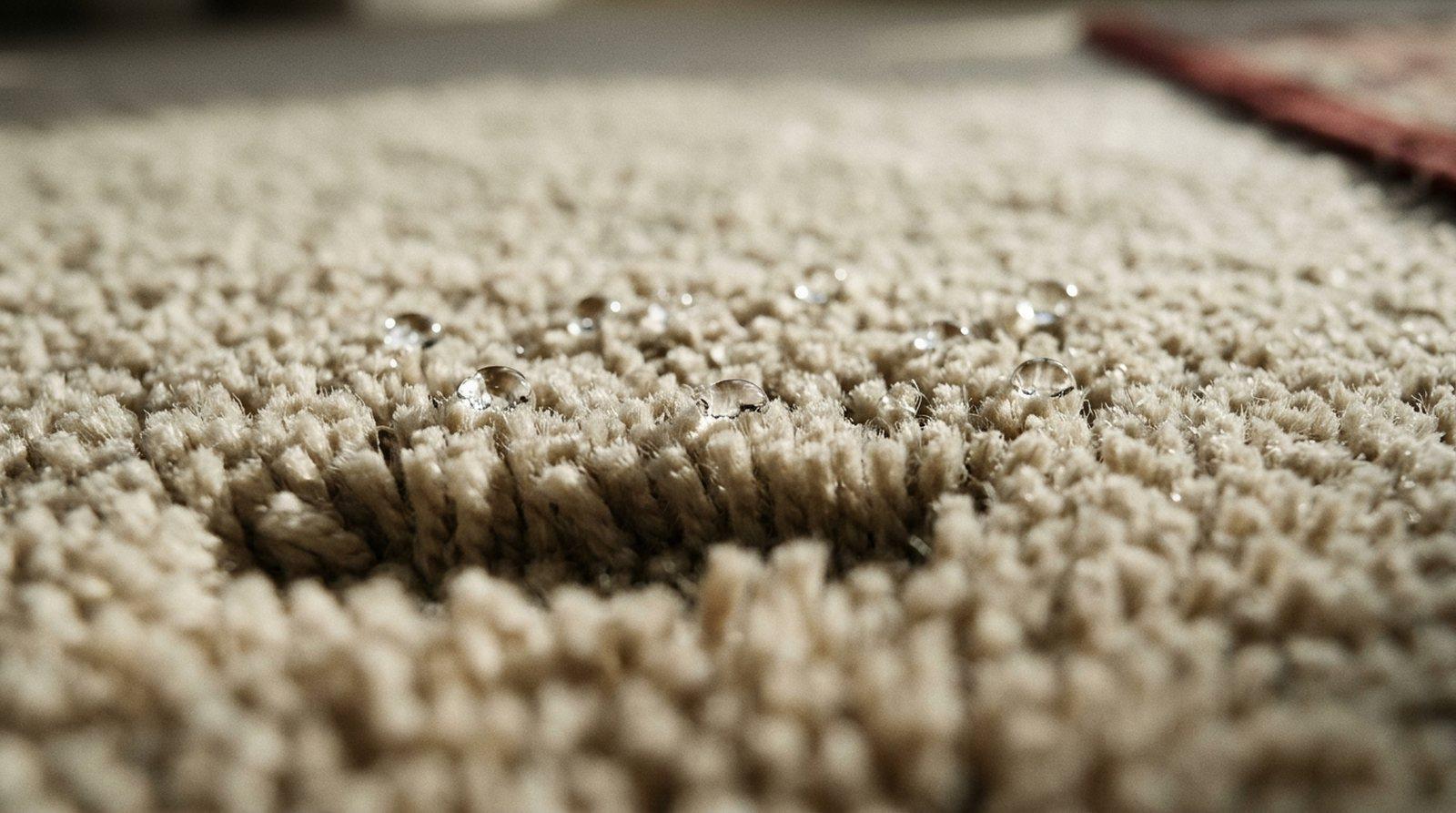
What a protector actually does
Think of it as a coating on the individual strands rather than a lid laid over the carpet. Treated fibre holds a spill up near the surface for longer, so a knocked-over glass sits there in a bead for a while instead of disappearing straight down into the pile and the pad. You get a window. If somebody is home with a white towel, that window is the difference between a spot that blots out and a spot we come and extract.
That is the honest version of the pitch, and it is a real benefit. It is also smaller than the way it usually gets sold at the door. The window is short, it only helps if a person is there to use it, and it does nothing for the spill that happened at nine on Friday night and got found on Sunday.
What it does not do
It does not stop a stain wicking back up. We have a whole post on why spots reappear a day or two after a cleaning, and the mechanism lives below the pile: moisture in the pad carries dissolved stain back toward the surface as the carpet dries. A topical treatment sits on the fibre up top. It has no say in what is going on down in the pad, so anything that got past the pile behaves the same way treated or untreated.
It does not stop a traffic lane going grey either. That is abrasion. Sand and grit grind against the fibre every time somebody walks the hall, and a block or two off the water in Barnegat or Waretown that sand comes in on everybody's feet about nine months of the year. Protector makes soil easier to release the next time the carpet is cleaned. It does not stop the soil arriving and it does not stop the fibre wearing.
And how long it lasts is the question nobody should give you a confident number for. Shaw's guide will tell you exactly how often the carpet has to be cleaned, at least once every eighteen months in its own words, and it sets no reapplication schedule at all for a topical treatment. It wears where you walk, which is the same place you wanted it.
Read the warranty before anyone sprays anything
This is the part that rarely comes up at the door and it is the one with money attached. That same Shaw care guide carries a warning in plain type: non-approved cleaning products and topical treatments, applied by you or by a professional carpet cleaner, may result in damage to your carpet that will not be covered by your warranty.
Read that twice if your carpet is newish. The mill is not saying protector is bad. It is saying that what goes onto your carpet is between you and your warranty, and that hiring somebody does not move the risk off you. The same guide is specific about what it does want, which is hot water extraction using products and equipment certified through the Carpet and Rug Institute's Seal of Approval programme, and the carpet cleaned at least once every eighteen months to maintain its appearance and useful life.
So if the carpet is still inside a mill warranty, find the care guide that came with it, or look it up by the carpet's name on the manufacturer's own site, and read what it says about topical treatments. Five minutes. If the carpet is fifteen years old and long out of warranty, none of this applies and you can decide purely on the merits.
Where we would spend the money and where we would not
We say the same thing on the upholstery side of this site and the carpet answer is no different. It buys time and it makes the next cleaning easier, and that is where the claims stop.
Worth it: stairs, the three or four feet of carpet inside every exterior door, the lane between the kitchen and wherever everybody sits, under a dining table where a small child eats, and a rental turnover where the next tenant's first spill is going to be somebody else's to blot. Those are small areas. Small areas mean a small number, and they are where the spills and the grit actually land.
Not worth it, in our opinion: a whole-house treatment that includes bedrooms nobody eats in, a formal room used twice a year, and any carpet already worn open in the lanes. Protector on a tired carpet is money going to the wrong half of the problem. If a carpet has reached that point the honest conversation is about cleaning it properly or replacing it, not about coating it.
What to ask whoever is quoting you
We do not sell a protector add-on, so take this as buyer's advice rather than a pitch. Four questions get a straight answer out of anybody:
1. What is the product, by name, so you can look it up yourself.
2. Is it approved for your carpet's warranty, and has the cleaner read your carpet's care guide.
3. Which areas are you putting it on, and what does it cost for those areas only rather than the house.
4. What should you do differently once it is on.
That last answer should be: nothing, except get to spills faster. If a cleaner tells you a treated carpet needs cleaning less often, that is the opposite of what the mill's own guide says. And if question two gets a shrug, you have your answer about the whole thing.
Related reading:
Want it done right the first time?
After Effects restores carpets and floors across Ocean County and the Shore. Send a photo and get a free, firm quote at your door.
Quick answers
People also ask.
No, and the carpet manufacturers do not claim it does. Shaw's residential carpet care guide, revision dated February 2024, says no carpet is stain proof, although many are stain resistant, which allows time for removal. Time is the benefit. A treated carpet holds a spill nearer the surface for a few minutes longer so you can blot it before it reaches the pad.
It depends on the product and on the mill, which is why it is worth checking before anyone sprays. Shaw's care guide warns that non-approved cleaning products and topical treatments, applied by you or by a professional carpet cleaner, may result in damage to your carpet that will not be covered by your warranty. Find your own carpet's care guide and read the section on topical treatments first.
No, and be careful with anyone who says it does. Shaw's guide sets its cleaning interval at as little as six months to eighteen months depending on traffic, and requires the carpet to be properly cleaned at least once every eighteen months to maintain its appearance and useful life. Nothing in it reduces that interval because a protector was applied.
Keep reading
New Carpet Is Down: When Can the Furniture Go Back?
When to move furniture after carpet installation: light pieces go back the same day. Give heavy ones a day and check the seams before anything covers them.
How to Clean a Microfiber Couch Without Ruining It
Why water leaves a ring on microfiber, what the S on the tag actually allows, how to fix a ring that's already there, and when to put the bottle down.