November 9, 2026 · 6 min read
After Effects Carpet Cleaning
How to Clean a Microfiber Couch Without Ruining It
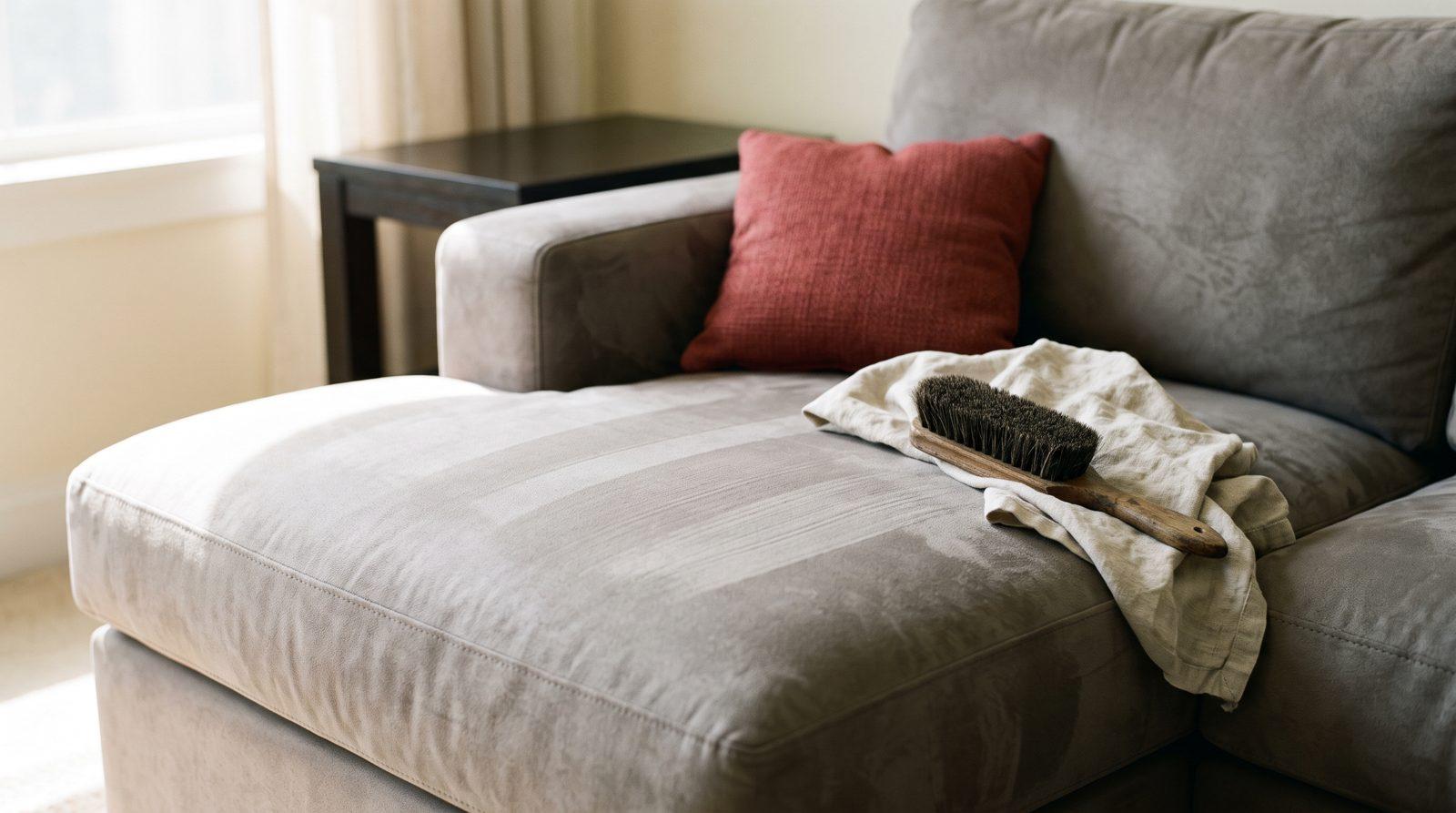
To clean a microfiber couch, read the tag before anything else. A lot of microfiber is coded S, which means no water at all: clean it with rubbing alcohol misted on light and brushed, never a damp rag. If it's W or WS, a little water is allowed, but the panel gets done seam to seam, not one spot. Water rings on microfiber happen because a damp patch dries from its edge and drags soil, soap and tap-water minerals out to that edge. Most of them come out if you clean the whole panel evenly and brush the nap once it's dry.
Why microfiber is so touchy about water
Microfiber is almost always polyester, sometimes with some nylon, spun into fibers under 1 denier each, which is thinner than a strand of silk. Polyester on its own shrugs off water. So it surprises people that so many microfiber couches carry an S on the tag.
The reason is the surface. Those fine fibers stand up as a short nap, a bit like suede, and anything that changes how the nap lies shows up as a different shade. Water does exactly that. It also loosens whatever has been sitting in the cushion for two years, and the dye and finish on cheaper pieces don't always like it either. The fabric survives. The look doesn't.
We see the same thing on pieces in rentals and year-round homes all over Ocean County. Someone wipes up a drink with a wet paper towel, and a week later there's a pale circle the size of a dinner plate that's more noticeable than the drink ever was.
What a water ring actually is
A water ring isn't a stain in the usual sense. When a wet patch dries, it dries fastest at the rim, so water keeps flowing outward to replace what evaporated and carries everything dissolved in it along for the ride. Body oil, old soil, soap if you used any, the calcium in tap water. All of it gets dropped at the edge where the last of the moisture leaves. The middle ends up cleaner than the rest of the cushion and the edge ends up dirtier, and that contrast is the ring.
Humidity makes it worse. In a shore house in late summer a damp spot can take most of a day to dry, which gives that outward flow hours to work. A fan on the cushion right away is one of the few home moves we'd always recommend.
This is also why the bigger you scrub, the bigger the ring gets. You aren't removing the dirt, you're relocating it to a new border.
Fixing a ring that's already there
First, the tag. If it says X, stop here: that fabric doesn't take water or solvent, and anything you try will make it worse. Our guide to the 4 codes (W, S, WS and X) covers why, and we'd never put anything wet on an X piece ourselves.
On an S couch the usual fix is isopropyl alcohol, the ordinary 70 or 91 percent rubbing alcohol from the pharmacy, in a spray bottle. Mist the whole panel the ring sits on, from seam to seam, so there's no new edge for anything to collect against. Wipe it in one direction with a white cloth or a clean white sponge, then let it flash off. Alcohol evaporates in minutes, which is the whole reason it works: it doesn't stay wet long enough to wick. Test it on the back of a cushion first, because some dyes will still move.
On a W or WS couch you can use water, but use distilled if you can, and keep it light. The same rule applies. Dampen the entire panel evenly, blot, and get air on it fast. A ring that came from tap water often fades on the second pass because you're finally spreading the minerals out instead of stacking them up.
Once it's bone dry, brush the nap. A soft upholstery brush or even a clean, dry soft scrub brush, all in one direction, lifts fibers that dried flat. Half the time what looks like a stain left behind is just matted nap catching the light differently.
What won't come out with a home attempt
Greasy darkening on the arms and the headrest is body oil, and alcohol only shifts some of it. Pet urine has usually gone through the cover into the foam, so cleaning the surface leaves the smell sitting underneath. A ring on a fabric that also changed color around it is often dye that moved, and that one is permanent.
Our rule of thumb is simple. If one careful, whole-panel attempt didn't fix it, a second one usually won't, and the third is where people start doing real damage. We'd much rather get the call after the first try than after the fourth.
How we handle microfiber on a job
Same as any upholstery: the tag is read before a bottle comes out. Durable W and WS fabrics get our usual process, a non-toxic pre-spray to break the oil loose, a soft hand tool to work it out of the nap, and controlled hot-water extraction that pulls the moisture back out, so the piece is dry in hours rather than days. S pieces get a low-moisture method instead of water.
Either way the whole cushion and the whole panel get cleaned, never a single spot, which is how rings get prevented in the first place. Then the nap gets groomed so it dries standing up.
Related reading:
Want it done right the first time?
After Effects restores carpets and floors across Ocean County and the Shore. Send a photo and get a free, firm quote at your door.
Quick answers
People also ask.
Only if the tag says W or WS. A lot of microfiber is coded S, which means solvent only, and water on an S fabric leaves rings and changes how the nap lies. Even on a W couch, use a little distilled water across the whole panel rather than soaking one spot, and get a fan on it.
Because it evaporates in minutes. Water rings form while a damp patch slowly dries from the edge and carries dirt outward. Alcohol is gone before that can happen, so it lifts light soil without leaving a border. Test it on a hidden spot first, since some dyes still move.
Clean the entire panel the ring sits on, edge to edge, with whatever the tag allows: alcohol for S, a light pass of distilled water for W or WS. Let it dry completely, then brush the nap in one direction. If one careful attempt doesn't shift it, call a professional before trying again.
Usually because one spot was cleaned and the rest wasn't, so the clean patch stands out, or because the nap dried flat and now catches the light differently. Brushing the dry fabric fixes the second problem. The first one is fixed by cleaning the whole panel.
Keep reading
New Carpet Is Down: When Can the Furniture Go Back?
When to move furniture after carpet installation: light pieces go back the same day. Give heavy ones a day and check the seams before anything covers them.
Is Carpet Protector Worth It on a Shore-House Carpet?
Carpet protector buys you time to blot a spill. It does not seal the carpet. What it does, what it will not do, and the warranty line to read first.