September 7, 2026 · 9 min read
By Peter De Leon, After Effects Carpet Cleaning
The Letter on Your Couch Tag Decides How It Can Be Cleaned
The letter on your couch tag is one of the upholstery cleaning codes, and that fabric tag decides how the piece can be cleaned. There are four: W is water-based, S is solvent only, WS is either, and X is vacuum only. Use the wrong one and you set the stain or shrink the cover.
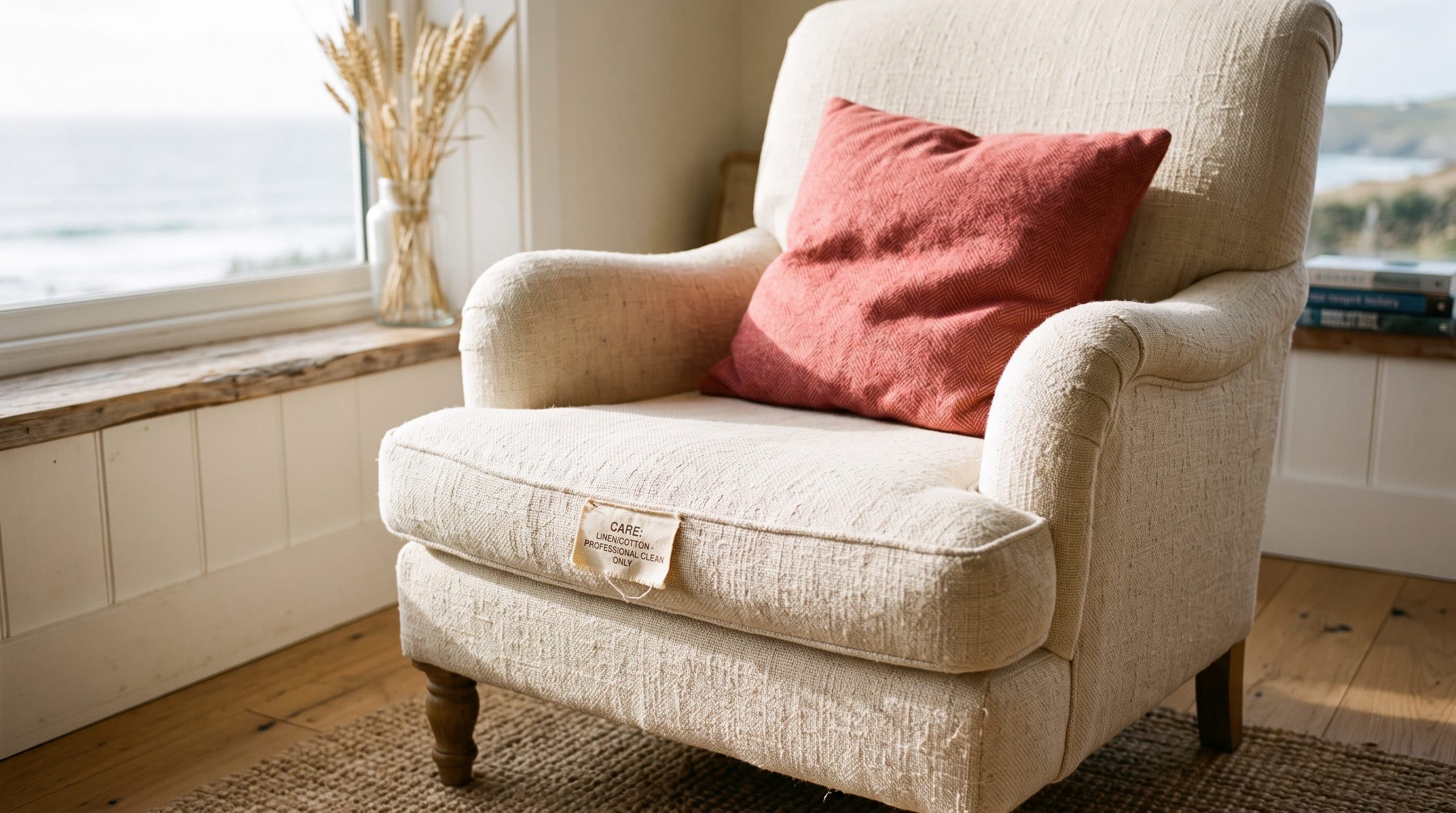
Where are the upholstery cleaning codes on the fabric tag, and what is the letter telling you?
The upholstery cleaning code is a single letter printed on a tag under the seat cushion, and it tells you the one thing that matters most before any cleaner touches the fabric: whether the couch can take water, needs solvent, or should never get either. Flip the loose cushion over, or check the tag stitched to the frame under the deck, and you are looking for a W, an S, a WS, or an X.
That letter is not a suggestion. The manufacturer built the fabric, the dye, and sometimes a backing that reacts a specific way to moisture, and the code is their instruction for keeping it intact. I am Peter De Leon, and I run After Effects Carpet Cleaning out of Barnegat, working couches and floors across Ocean County and up into Monmouth and Mercer. The first thing I do on any upholstery job, before I open a single bottle, is find that tag and read it.
If the tag is gone, faded, or the couch is a hand-me-down that lost it years ago, that is not a dead end, and there is a section below on how a pro tests when there is no code to read. But when the tag is there, the letter decides everything that follows, and everyone who skips it is guessing with someone else's furniture.
The four codes at a glance: W, S, WS and X
Here are the four upholstery cleaning codes in order, W, S, WS and X, with what each one permits. Read yours first, then match the method to the letter, not the other way around.
W means water-based. Clean it with a water-based foam, worked in light and extracted, never soaked.
S means solvent only. No water at all, or you risk rings, shrinkage, and a permanent watermark.
WS means either. Water-based or solvent are both safe, though you still control how much moisture goes in.
X means vacuum only. No water, no solvent, nothing wet, just gentle vacuuming or light brushing.
Those four cover almost every fabric sofa, sectional, armchair, and dining seat in a shore house. The rest of this walks each one in order, because the difference between W and S is the difference between a clean couch and a shrunk cover.
W: water-based, and why that is not permission for anything wet
W means the fabric is safe to clean with a water-based cleaner, and that is the whole letter: a foam worked up from a mild upholstery shampoo, applied light, then extracted back out. It does not mean you can soak it, steam it, or pour a bucket of hot water and dish soap over the cushion, and the gap between water-based and water-logged is where most W couches get ruined.
A W fabric tolerates the moisture in a controlled foam. It does not tolerate saturation. Over-wet a W piece and you get browning, where natural fibers wick tannins up to the surface as they dry and leave a tan halo, plus a watermark at the edge of the wet zone and a cushion that stays damp for days. On a closed-up shore house in August, that trapped moisture in the fill is exactly how a freshly cleaned couch comes back smelling musty instead of clean.
The professional version of a W clean is a light pre-spray to break the body oil loose, a soft hand tool to agitate it out of the weave, and a controlled hot-water extraction pass that pulls most of the moisture straight back out. The couch comes back even in color and damp rather than soaked, which is the point of the low-moisture approach.
S: solvent only, and what happens when water hits it
S means solvent only: the fabric has to be cleaned with a dry-cleaning solvent and no water at all. Put water on a true S fabric and you get rings, shrinkage, and often a permanent watermark, because the fibers or the dyes are built to react badly to moisture.
S fabrics are usually the delicate or natural weaves, or ones whose dye is not colorfast. Water makes them pucker and shrink, or it lifts the dye and moves it, so a wet cloth dragged across the arm leaves a lighter streak and a hard-edged ring where the damp area dries. None of that comes back out. The whole reason for the code is that the mill already knows this fabric and water do not mix.
Here is where the shore trips people up. A salt or sand track on an S couch is the tempting one, because the instinct is to wipe it off with a damp paper towel, and water is precisely what the tag forbids. Salt has to be brushed and vacuumed out dry and then cleaned with solvent, never sponged. Solvent work also needs ventilation and the right product, which is another reason an S piece is a call, not a Saturday project.
WS: the flexible one, and where it still has limits
WS means you can use either a water-based cleaner or a solvent, which makes it the most forgiving code and the most common on modern sofas. It is still not a blank check: WS tells you which chemistry is safe, not how much moisture the fabric or the fill can take.
You still test, you still control the water, and you still avoid oversaturation. A WS microfiber will waterspot if you dab one cushion with a wet cloth and let it dry in a ring instead of cleaning the whole panel edge to edge. The code protects the fibers from the wrong chemistry; it does not protect you from a sloppy method.
In practice, WS is where judgment pays off. On general soil and body oil, a water-based clean does the job. On a greasy or oily spot, solvent lifts what water cannot. Either way the smart move is to clean the entire panel rather than a coin-sized patch, so you never leave a clean halo sitting inside a dingy cushion. That is the difference between spot-cleaning and cleaning the piece.
X: vacuum only, and the mistake that ends the fabric
X means vacuum only: no water, no solvent, nothing wet, just gentle vacuuming or light brushing. The mistake that ends an X fabric is treating a spill on it like a spill on anything else and reaching for a cleaner, because any liquid, water or solvent alike, can shrink it, watermark it, or crush the pile for good.
X gets assigned to the fabrics that cannot take any cleaning agent at all, some velvets and certain delicate natural weaves among them. Even the solvent that would be fine on an S piece is off the table here. The fibers distort, the pile flattens where it was rubbed, and the texture does not recover. Vacuuming with a soft brush attachment, and staying ahead of the soil so it never has to be washed out, is the entire maintenance plan for an X couch.
If an X piece is genuinely soiled past what a vacuum can handle, that is an honest conversation about a fabric specialist or about living with the limit, not a reason to experiment with a bottle from under the sink. The tag is telling you the fabric has a hard ceiling, and the fastest way to hit it is to try to clean your way out.
No tag at all, and how a pro tests instead
No tag is not the end of it, because a pro identifies the safe method by testing rather than guessing. When the code is missing, faded, or the couch arrived without one, the fabric gets read by hand and by a small hidden test before anything is cleaned across the whole piece.
The sequence is simple and it never skips a step. First, identify the fiber by feel and construction, natural versus synthetic, because that already narrows what is safe. Second, test water on a white cloth in a hidden spot, an inside rear panel or under a cushion, and watch for dye transfer, a watermark, or the fabric drawing up. Third, test a small amount of solvent in the same kind of hidden spot. Fourth, start with the gentlest method that passed and only escalate if the fabric proves it can take more.
The rule underneath all of it is to treat an unknown fabric as the most restrictive code until it proves otherwise. Assume vacuum-only, then let the hidden tests earn the water or the solvent. That is the opposite of how a rushed job runs, and it is exactly why reading the couch is a skill and not a setting on a machine.
The home remedies that are quietly setting the stain
The home remedies that feel productive are usually the ones quietly setting a stain for good, and the worst offender is heat. Blotting with hot water, running a garment steamer over a spot, or scrubbing with dish soap on a fabric whose code forbids water are the three that turn a cleanable mark into a permanent one.
Heat sets protein and tannin stains, so hot water on coffee, wine, blood, or pet accidents can cook them into the fibers instead of lifting them. Scrubbing frays the weave, pushes the stain deeper, and crushes the pile so the spot reads different even after it is clean. Oversaturation causes the browning and wicking already covered, and a colored rag or paper towel can transfer its own dye into a light fabric while you work. On an S or X couch, any of the sprays people keep under the sink is a coin flip on shrinkage and rings.
What actually helps is boring and it works: blot, never rub; lift toward the center of the spot; use cool water only if the code allows water at all; and get to it before it dries. The shore version is to let dried salt and sand go completely dry, then vacuum it out rather than grind it in with a wet cloth. When a spot is past that, or the code says hands off, the move is to stop before you set it. This guide was updated September 2026. Send a photo through the free estimate form or call or text After Effects at 609-342-3183, and we will read the tag and the fabric before anything wet ever touches it.
Related reading:
Want it done right the first time?
After Effects has restored carpets and floors across the Shore for over 30 years. Send a photo and get a free, firm quote at your door.
Quick answers
People also ask.
They are the manufacturer cleaning codes on the fabric tag, and each one names the only safe way to clean the piece. W means clean with a water-based cleaner. S means solvent only, with no water at all. WS means either water-based or solvent is safe. X means vacuum only, with no water and no solvent. The letter is set by the fabric and dye, so it decides the method, not your preference.
S means the fabric must be cleaned with a dry-cleaning solvent and no water. It is common on delicate or natural weaves and on fabrics whose dye is not colorfast. Water on a true S fabric causes shrinkage, dye bleed, and a permanent watermark ring where the wet edge dries. That is why wiping an S couch with a damp cloth, which feels harmless, is the most common way people ruin one.
Only if the tag allows it, and even then a garment steamer is the wrong tool. Steam is heat plus moisture, which sets protein and tannin stains and can watermark or shrink a fabric coded S or X. On a W or WS couch, controlled hot-water extraction that pulls the moisture back out is safe, but blasting a spot with a handheld steamer usually drives the stain deeper and leaves the cushion wet. Read the code before any heat touches the fabric.
The vacuum-only code is X, and it means the fabric cannot take water or solvent, so cleaning is limited to gentle vacuuming and light brushing. Any liquid can shrink it, watermark it, or crush the pile permanently. X fabrics, including some velvets and delicate natural weaves, are maintained by vacuuming often and staying ahead of the soil. If an X piece is soiled past that, it is a job for a fabric specialist, not a home cleaner.
Look on a tag under the seat cushion, or on the tag stitched to the frame under the deck where the cushions sit. Flip the loose cushions and check both faces of the tag. On a sectional, each piece can carry its own tag. If you find more than one letter, the cleaning code is the W, S, WS, or X, not the fiber content or the fire-safety line printed alongside it.
Yes. When the code is missing or faded, a pro tests instead of guessing: identify the fiber by feel and construction, test water on a white cloth in a hidden spot for dye transfer and watermarking, test solvent the same way, then start with the gentlest method that passed. The working rule is to treat an untagged fabric as the most restrictive code until the hidden tests prove it can take more.
A little, if it is truly a light water-based foam that you extract, but the risk at home is over-wetting. W means water-based, not water-logged. Soaking a W cushion causes browning as the fibers wick to the surface while drying, leaves a watermark at the edge of the wet zone, and traps moisture in the fill that turns musty in humid shore weather. The safe clean uses low moisture and strong extraction, which is the part a spray bottle and a rag cannot do.
Keep reading
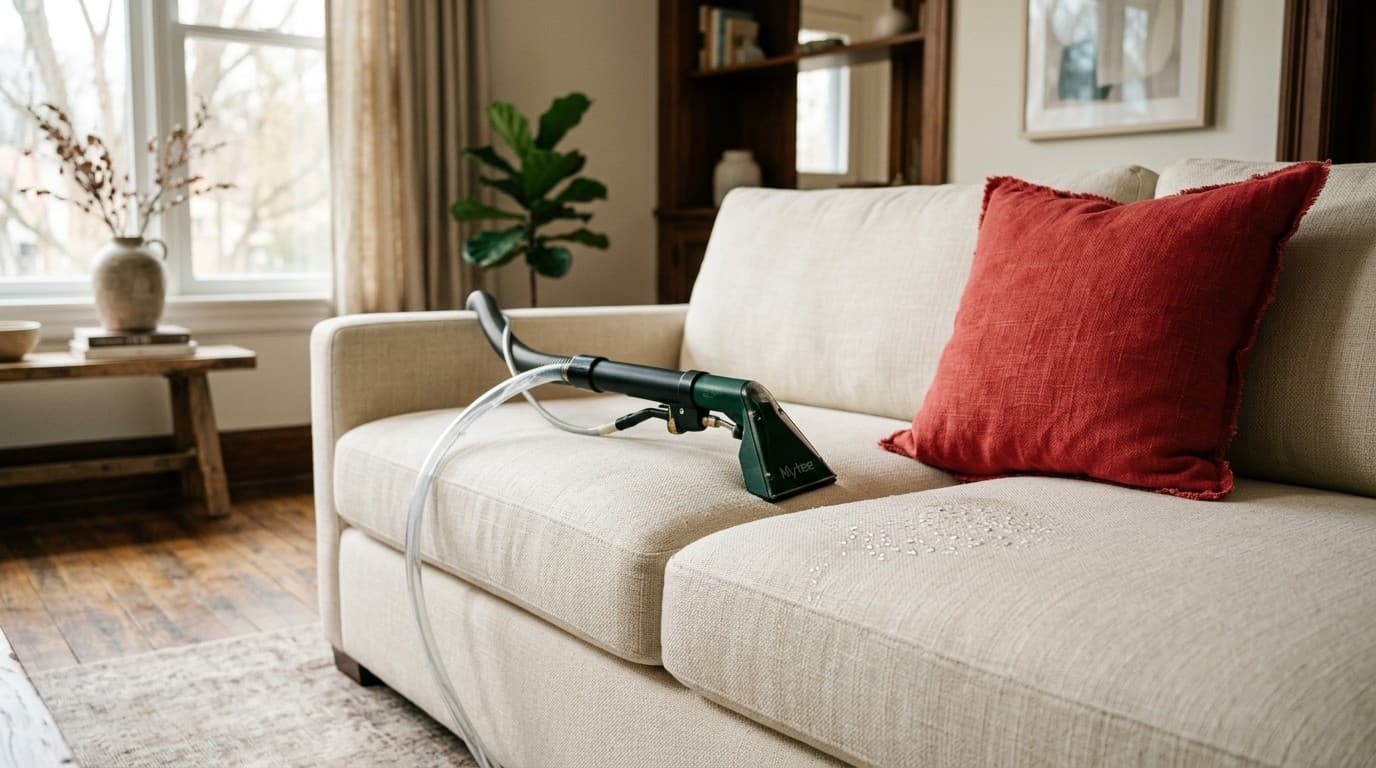
What Professional Upholstery Cleaning Actually Does to a Couch
Professional upholstery cleaning is not carpet cleaning on furniture. It pulls embedded soil out of the cushion fill a vacuum never reaches, using controlled heat and low-moisture extraction so the frame never gets soaked. Here is what actually happens.
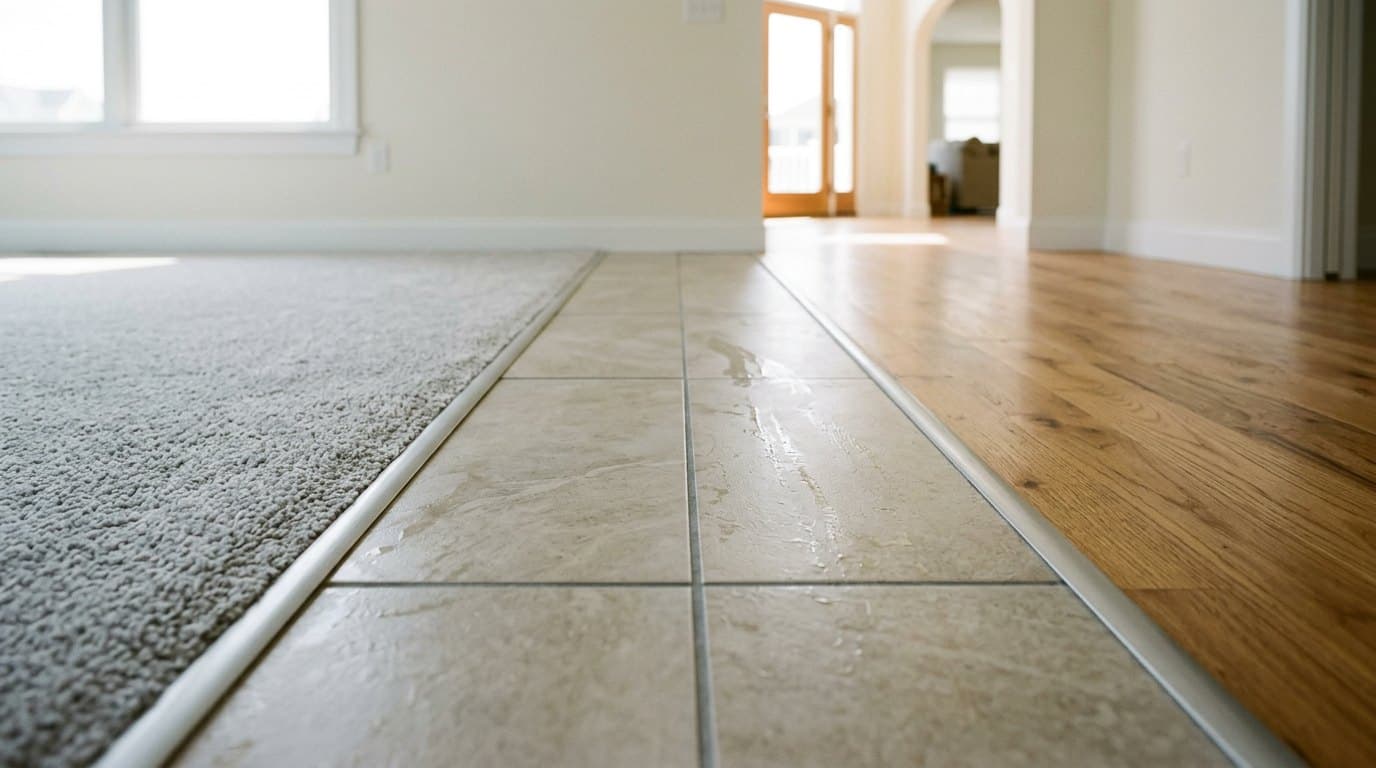
Floor Cleaning Services: What Each Surface Actually Needs
Most people search for a floor cleaning service, not a carpet cleaner, and then find every company only does one surface. Carpet, tile and grout, hardwood, vinyl and area rugs each need a different method. Here is what each one actually takes.