
August 24, 2026 · 10 min read
After Effects Carpet Cleaning
The Stains That Don't Come Out (and Why)
Not every mark on your carpet is a stain. Some are permanent damage that no professional carpet cleaner can remove, because it was never dirt. Three common causes, dye loss, bleach and benzoyl peroxide from acne cream, strip color instead of depositing it. Here is how to tell the difference before you book.
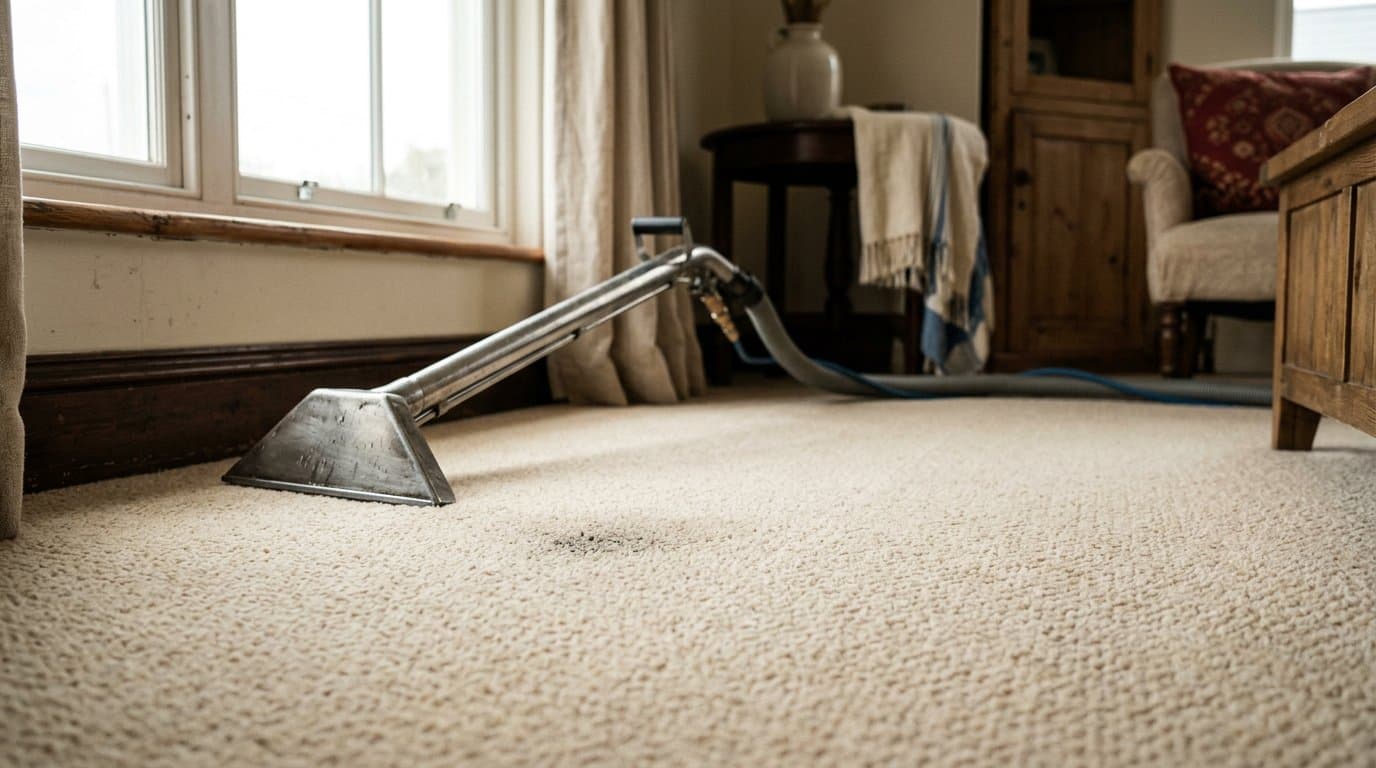
What is the difference between a stain and permanent damage?
A stain lifts because something was added to the carpet that was never part of it: dirt, food, drink, ink. Damage does not lift, because something was taken away or changed instead, and almost always that something is color. That one distinction decides whether a cleaning fixes a spot or just proves, honestly, that it will not. (Updated August 2026.) At After Effects Carpet Cleaning in Barnegat, we would rather tell you that on the phone than run a job that cannot deliver what you are hoping for.
The test underneath both categories is chemistry, not effort. A real stain sits in the fiber as a foreign substance, and hot water and strong extraction break that substance loose and carry it away in the recovery tank. Color loss has nothing to lift. The dye that used to live there is gone, so there is nothing left for suction to pull out, no matter how many passes the wand makes.
Here is how the two actually look, side by side, because the eye can usually tell before a machine does. A stain runs darker or more saturated than the carpet around it, the edges are soft and a little uneven from spreading or wicking, and dabbing it with a damp white towel and light pressure transfers at least a trace of color onto the towel. Damage runs lighter or whiter than the carpet around it, the edges are often crisp, especially with a bleach or chemical splash, and the damp-towel test transfers nothing, because there is no color left in that spot to transfer.
Why do dye loss, bleach and benzoyl peroxide leave color gone, not hidden?
Because each of them breaks the chemical bond holding dye to the fiber instead of leaving a colored substance sitting on top of it. Once that bond breaks, the color is gone from the fiber itself, and there is nothing left for hot water and suction to pull out.
Most residential carpet is nylon or polyester dyed after the fiber is made, heat and chemistry bonding color onto a fiber that started out plain. That bond holds up fine against soil and ordinary spills. It does not hold up against a handful of household chemicals built to break color bonds on purpose.
Chlorine bleach is the fastest and most common cause we see, a splash from a cleaning product, hair color, pool chemicals tracked in on bare feet, a bleached shirt across the hallway on laundry day. It can turn dyed carpet white or straw-colored in seconds, permanently.
Benzoyl peroxide is the one that catches people off guard, because nothing was ever spilled. It is the active ingredient in most acne creams and washes, and it transfers off hands, faces, pillowcases and towels onto carpet with barely any contact, no wet spot and no smell at the time. Days or weeks later a faint white or yellow spot shows up, already permanent, in a place nobody remembers spilling anything.
A few others show up less often but do the same thing: certain plant fertilizers, some drain cleaners, hydrogen-peroxide cleaning sprays, at-home hair bleaching kits. None of these leave a stain a cleaner can lift. They leave a bleached spot, missing color, with the fiber underneath still perfectly intact. That is why a stronger solution or a hotter pass over a real bleach spot never moves it, even a shade.
Why do sun fade and traffic wear look like dirt when they are not?
Because they change how the fiber reflects light instead of adding or removing color from it, and both read like a dirty spot that will not clean out for the simple reason that there is no soil there to remove.
Sun fade happens slowly, over months and years, in carpet that sits in direct sun through a sliding door or a bay window. Ultraviolet light breaks down the dye a little at a time, and most people notice it as a rectangle of carpet that looks paler than the rest, right in the path the afternoon sun crosses.
Traffic wear is mechanical rather than chemical. The same lane walked every day, kitchen to back door, hallway to bedroom, in front of the couch, crushes and frays the fiber tips over years. Crushed fiber scatters light differently than upright fiber, so that lane reads gray and dull even minutes after a thorough cleaning. That is abrasion, and no amount of extraction restores fiber that has physically worn down.
There is a simple way to tell which you are looking at. Clean the spot and watch it. Real dirt gets darker while wet and then noticeably brighter than before once it dries. Sun fade and traffic wear look almost identical before and after, because cleaning was never going to touch either one.
Why won't an old, heat-set stain come out?
Because heat did to that spill what a factory dye process does to raw fiber. It drove the color deeper into the fiber and helped it bond there permanently, instead of leaving it sitting loosely on the surface where extraction can still reach it.
A fresh spill, cleaned within a day, is mostly still sitting on the outer layer of the fiber, which is why same-day spot removal works as well as it does. Heat changes that fast: a sunny windowsill, a radiator nearby, months of a hot vacuum motor passing over it. The worst offender we still see is a well-meaning DIY fix, a hot iron pressed over a damp towel laid on the stain, an old trick some advice still repeats. It lifts some stains. On plenty of others it cooks the color straight into the fiber.
Sugary spills are the clearest example. Coffee, tea, wine and soda respond well caught the same day. Left for weeks and warmed repeatedly, by sun through a window, by a heat vent nearby, by nothing more than foot traffic, the sugars in that spill can caramelize into the fiber, and the color stops sitting on top of the carpet and becomes part of its surface.
Age by itself is not the real enemy, heat is. A year-old stain that stayed cool and shaded can still respond to the right pre-treatment. A three-week-old stain hit with an iron or a summer of direct sun may already be permanent. The history you give us, what it was, how it was treated, where it sat, gets us most of the way there before we arrive.
What causes dye transfer from rugs, mats and cardboard?
A rug, a rubber-backed mat or a cardboard box does not need to spill anything on your carpet to stain it. Each one can bleed or leach its own color directly into the fiber underneath it the moment it gets damp, which is why the homeowner is often genuinely baffled, nothing was ever spilled there.
Rugs first. Plenty of area rugs, especially older or inexpensive ones, are not colorfast. Any moisture underneath one, a wet umbrella set on it, humidity off a window, a pet accident on the rug itself, can carry the rug's own dye straight down through the pile and onto the carpet beneath it. What shows up afterward is a stain shaped exactly like the rug, on carpet nothing ever happened to.
Rubber-backed mats are a stranger version of the same problem. Entry mats, bath mats and rug pads with a rubber or latex backing can leave a yellow-brown stain on light carpet underneath them after months in place, especially near a door with sun and humidity. That is a chemical reaction, antioxidants in the rubber breaking down and migrating into the fiber, the same signature as bleach or dye loss, so cleaning cannot lift it back out.
Cardboard is the one people never suspect. A moving box left on carpet, if the box or the floor underneath picks up even a little dampness, a damp basement slab, a rainy moving day, ordinary condensation, can transfer brown tannin staining into light carpet in the exact footprint of the box.
The thread running through all three: the source was never a spill onto the carpet. Something sitting on the carpet transferred its own color into the fiber below, which is why the shape of the stain, a rug outline, a rectangle from a mat, is usually the fastest way to identify the real cause.
What can be done when cleaning is not the answer?
Once a spot is confirmed damage rather than a stain, here are the honest options, least invasive first.
1. Say so, and stop there. If cleaning genuinely will not touch a spot, the right move is telling you before spending your time and money trying, not running an extra pass over it to look like something was done.
2. Rearrange around it. Moving a piece of furniture, a runner, or a small area rug over a bleach spot or a worn lane a few inches across is often the cheapest real fix there is, and it holds up fine for years.
3. Patch it, if there is carpet to spare. A remnant left over from installation, a scrap tucked in a closet, or carpet from a spot nobody sees, can be cut and set into a small damaged area. Done well on carpet with a repeating texture, a patch is close to invisible. It works best on a spot a few inches across, not a whole traffic lane.
4. Replace the section, or the room. Past a certain size, or with no matching remnant anywhere in the house, replacing that stretch honestly beats a patch that will show a seam. There is a full breakdown of when patching wins versus when replacing does on the site's clean-it-or-replace-it guide, worth a read before you spend money either way.
What we will not do is run a stronger chemical or a second pass over a confirmed bleach spot hoping this time is different. It will not be, and it wastes your appointment slot and the next person's, the one with a real stain that will actually respond.
How can you tell before you book?
Send a photo before the appointment, and check these three things yourself in the meantime. Between them they usually settle it before we even walk in the door.
1. Lighter, not darker. A real stain is almost always darker or more saturated than the surrounding carpet. A spot that is lighter or whiter is much more likely to be bleach, dye loss or fade than dirt.
2. Location tells a story. A rectangle by a sunny window, a lane between the kitchen and the back door, a shape that matches a rug or a mat that used to sit right there. Location like that points to damage, not a spill.
3. The damp-towel test. Press a clean white towel on the spot with a little water and light pressure. Color that transfers onto the towel is a real stain doing what stains do. No transfer at all, on a spot that is clearly a different color than the rest of the carpet, points to damage.
After Effects Carpet Cleaning is owner-operated, based in Barnegat and working the whole Ocean County shore, Waretown and Manahawkin, down the LBI corridor, up through Toms River and Brick, plus the Monmouth and Mercer County towns on the service-areas pages. Send a photo of the spot through the free estimate form and we will give you a straight answer on which one you have before anyone books an appointment. You can also call or text us directly at 609-342-3183.
Related reading:
Want it done right the first time?
After Effects restores carpets and floors across Ocean County and the Shore. Send a photo and get a free, firm quote at your door.
Quick answers
People also ask.
No, not once the bleach has stripped the dye out of the fiber. That is missing color, not a stain sitting in the carpet, and there is nothing left for hot water or extraction to pull out no matter how strong the solution is. At the walk-through we tell you honestly whether it is real bleach damage, and if it is, talk through patching a small spot or replacing the affected stretch.
The most common cause is benzoyl peroxide, the active ingredient in most acne creams and washes. It transfers off hands, faces, pillowcases and towels onto carpet with barely any contact, so there is no wet spot or smell to notice at the time. Days or weeks later a faint white or yellow mark shows up in a spot nobody remembers spilling anything on. Certain plant fertilizers and drain cleaners can do the same thing, far less often.
No. Sun fade is ultraviolet light slowly breaking down dye in carpet that sits in direct sun through a window, a sliding door or a skylight, and no cleaning restores color that light has already broken down. The fix going forward is blocking the sun, blinds, UV window film, or a rug over the worst of it, not another cleaning pass.
Sometimes, and it depends more on heat than on age. A stain that stayed cool and out of direct sun the whole time can often still respond to the right pre-treatment, even a year later. One that got hit with a hot iron, sat on a sunny windowsill, or sat near a heat vent for weeks may already be heat-set into the fiber and permanent. Tell us what happened to the spot as well as when, and we can usually tell which one it is.
The rug or mat is the source, not the carpet underneath it. Non-colorfast rugs bleed their own dye down into the carpet when they get damp, and rubber-backed mats leave a yellow-brown stain from antioxidants in the rubber breaking down over months near a door. Both leave a stain shaped exactly like whatever was sitting on top.
Two quick checks tell you most of the time. Color: a real stain is darker than the surrounding carpet, damage is usually lighter or whiter. Transfer: press a damp white towel on it with light pressure, a stain transfers some color, damage transfers nothing. Send us a photo either way and we will give you a straight answer before you spend money on an appointment that will not change the spot.
Keep reading
How to Deep Clean Luxury Vinyl Plank Floors
Dry soil first, a barely damp mop with a neutral cleaner, and never a steam mop. Why LVP goes cloudy, what damages it at the shore, and how we clean it.
Can You Take an Area Rug Somewhere to Be Cleaned?
We clean area rugs in your home, not at a depot. What in-place cleaning reaches, which rugs genuinely need a plant wash instead, and what is going on with the floor underneath.