November 23, 2026 · 6 min read
After Effects Carpet Cleaning
How to Get a Mildew Smell Out of Carpet, and When to Worry
A mildew smell in carpet means moisture is sitting somewhere it shouldn't, and most of the time that's the pad underneath, not the fibers you can see. If the smell is faint, showed up during a muggy stretch and the carpet feels dry, it's usually fixable: dry the room out first, then get the carpet and pad cleaned and dried properly. If the carpet or the floor under it feels damp, or the smell gets stronger week over week, water is still getting in from somewhere, and no cleaning will hold until that's found.
Musty or sharp: figure out which smell you have
Before anything else, put your nose close to the carpet and be honest about what it smells like. Mildew is musty and earthy, like a basement or a beach towel that sat in a bag. Pet urine is sharp and a little ammonia-like. Both get worse when the air is humid, which is why people down here mix them up every summer.
The difference matters because the fix is different. A urine smell lives in dried salts in the pad and needs enzyme treatment at that depth. A mildew smell is a moisture problem first and a cleaning problem second. Treat it like a stain and spray it, and you'll be smelling it again in a week.
Find where the moisture is coming from, then dry it out
Mildew needs water, so the smell is a clue that something has been wet for too long. The usual suspects in the houses we walk through: a carpeted room on a concrete slab or a finished basement, a sliding door where rain blows in under the track, a potted plant that has been overwatered on the same spot for a year, an air conditioning drain line that drips, or a carpet that was cleaned with a rental machine and stayed wet into the next day.
In the lagoon homes along the bay there's often no single leak at all. The air itself is damp most of the summer, and a closed-up room with the AC off just never dries out.
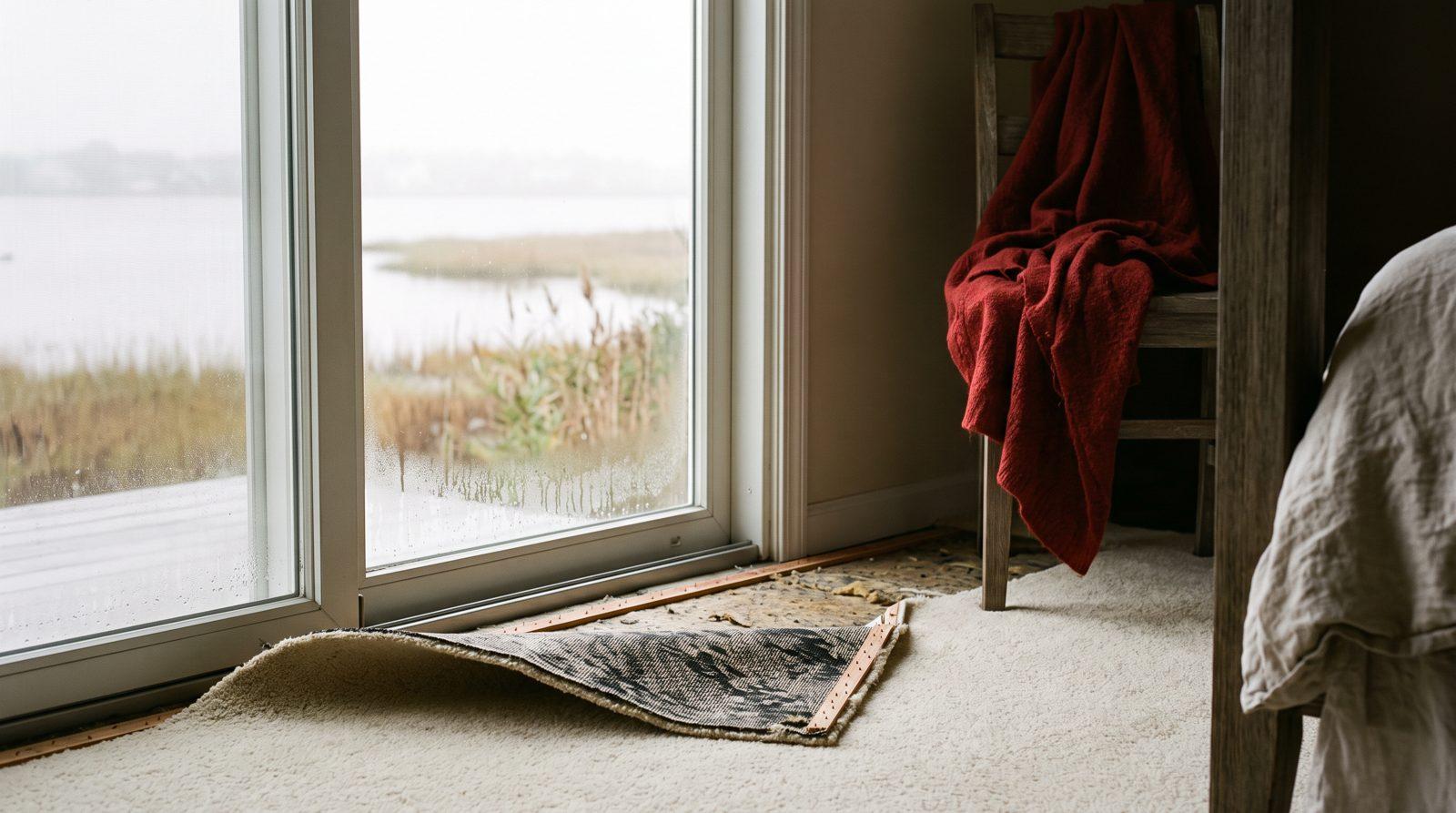
If you can do it without wrecking the edge, lift a corner of the carpet in a closet and smell the back of the carpet and the pad separately. Press a paper towel on the pad and on the floor below it. A dry pad with a faint musty smell is a humidity problem. A damp pad, a dark stain on the subfloor, or anything fuzzy growing on the back of the carpet means water has been sitting there.
Timing matters here. The EPA's mold guidance says wet materials should be dried within 24 to 48 hours to keep mold from getting started, and it recommends keeping indoor humidity below 60 percent, ideally between 30 and 50.Then dry the room. Run the air conditioning or a dehumidifier with the door closed for a couple of days and see if the smell fades. Open windows only when the air outside is drier than the air inside. On a heavy August day by the bay, an open window just lets more moisture in.
Fix whatever put the water there: the door sweep, the plant saucer, the drain line. That part nobody can do for you with a carpet machine.
Skip the home remedies that add water. Soaking the spot with vinegar and water, or going over it with a rental machine that leaves the carpet wet for a day, can make a mildew smell worse. Baking soda left overnight and vacuumed up will take the edge off at the surface. It doesn't dry the pad, and it won't touch whatever is going on below.
When cleaning fixes it, and when it won't
If the room is dry now and the smell is in the carpet and pad, a proper extraction usually takes care of it. Our cleanings start with a walk-through where we look for odor sources before any hose comes off the truck, so we'll tell you there whether we think it's mildew, a pet issue, or both. The truck-mounted unit runs hot water and strong vacuum and pulls most of the water back out, so the carpet dries in 4 to 8 hours on a normal day and closer to 8 to 12 hours in humid shore weather with the house shut. That dry time is the whole point on a mildew job. A carpet that stays damp for a day after cleaning is how a lot of musty smells start in the first place.
Cleaning won't fix it if water is still getting in, if the subfloor is wet or stained, or if there's visible growth on the pad or the back of the carpet. That's a water problem, and the right first call is whoever stops the water, then someone who handles mold if you can see it. Once that's done, the pad in that section usually has to go. Pad is cheap next to carpet, and we supply and install new pad when a section needs it, so replacing the whole room is rarely the answer.
We'd say the same thing about a shore house that's being closed up for the winter. Set a dehumidifier to drain on its own or leave the heat low with the doors open between rooms, rather than locking it up with the windows cracked. The carpet you come back to in April will tell you which one you did.
Related reading:
Want it done right the first time?
After Effects restores carpets and floors across Ocean County and the Shore. Send a photo and get a free, firm quote at your door.
Quick answers
People also ask.
It helps at the surface. Sprinkle it, leave it overnight and vacuum it up, and the smell usually drops for a while. It doesn't dry the pad or deal with the moisture that caused the smell, so if the room stays damp the smell comes back.
It can if the carpet stays wet too long. That usually happens with rental machines or a closed-up house on a humid day. A truck-mounted extraction pulls most of the water back out, and the carpet should be dry in 4 to 8 hours, or 8 to 12 hours in heavy shore humidity with the house shut.
Usually not the carpet. If the smell came from humidity and the carpet is dry, cleaning and drying fixes it. If the pad got soaked or has growth on it, that section of pad gets replaced once the water source is fixed, and the carpet often goes back down over the new pad.
Because the air is wetter. Humid air keeps a pad from fully drying, and it brings out old smells that seem gone in dry winter air. If it fades every fall and comes back every June, humidity is the cause, and keeping the room dry with air conditioning or a dehumidifier is the first fix.
Keep reading
New Carpet Is Down: When Can the Furniture Go Back?
When to move furniture after carpet installation: light pieces go back the same day. Give heavy ones a day and check the seams before anything covers them.
Is Carpet Protector Worth It on a Shore-House Carpet?
Carpet protector buys you time to blot a spill. It does not seal the carpet. What it does, what it will not do, and the warranty line to read first.