November 2, 2026 · 7 min read
After Effects Carpet Cleaning
How Often Upholstery Actually Needs Cleaning
Most fabric furniture wants professional cleaning every 12 to 24 months. Pets, small children or a sofa that gets sat on every single evening pull that in to every 6 to 12 months, and a formal piece nobody uses can go longer than either. Nobody actually books on a schedule, though. People book when guests are coming, which is usually about three years late, and that is why the first clean on an older sofa takes so much longer than the second one.
The calendar is a starting point, your arms are the real answer
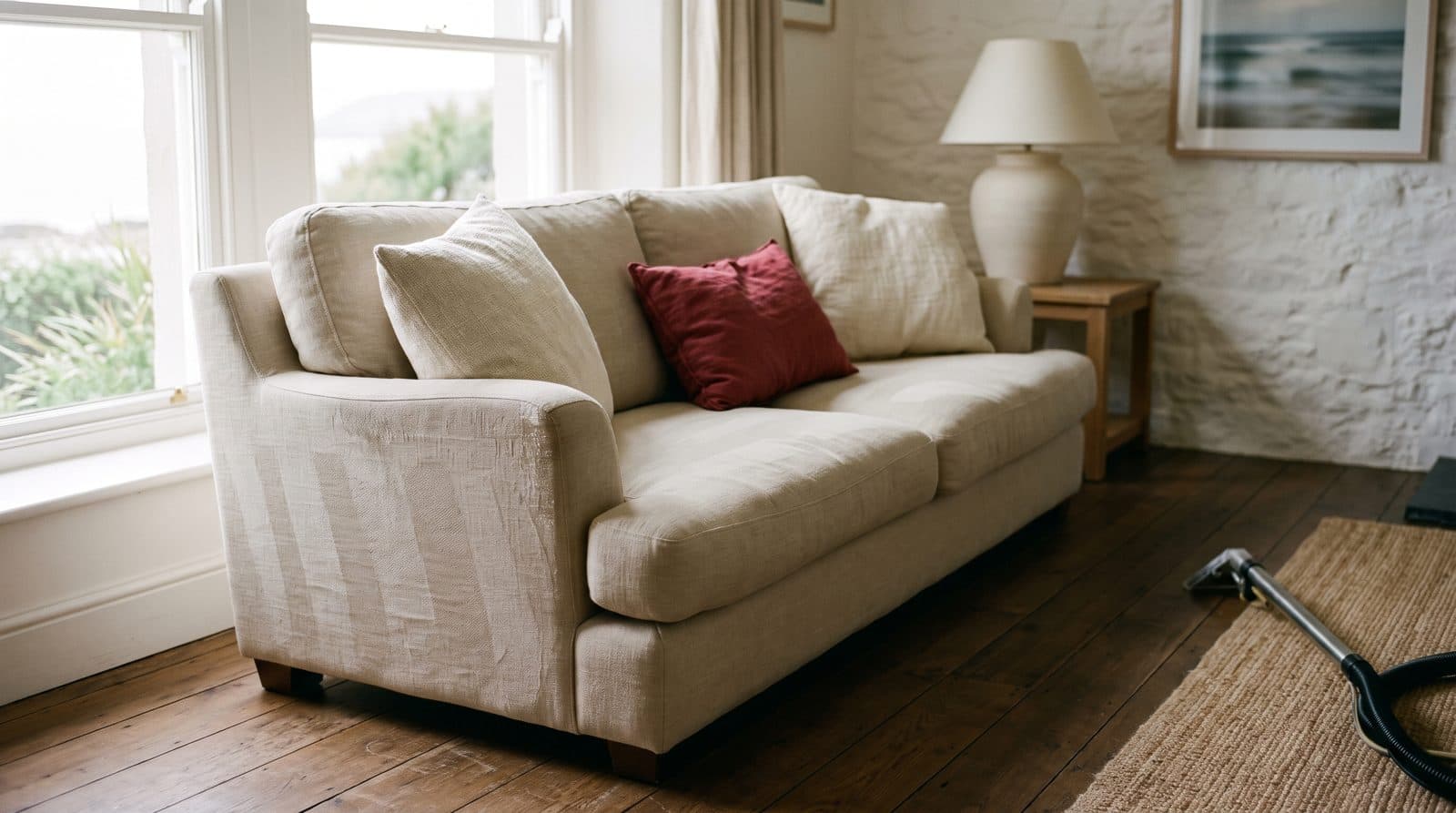
Furniture tells you where it is in its cycle if you know where to look, and it is not the seat cushions. Look at the tops of the arms and the headrest area first. That is where hands and hair put body oil into the fabric, and oil is what turns into the darker, slightly shiny patch that people assume is permanent wear.
Run the back of your hand across the arm top and then across a side panel nobody touches. If the two feel different, one slick and one dry, the piece is due. That difference shows up well before anything looks dirty, and it is the single most useful check we can give somebody over the phone.
The second check is the seat deck under a loose cushion. Pull one out and look at what has worked its way down into the gap. On a shore house that is sand, and sand does not sit politely in the crack. Every time somebody sits down it is being ground into the fibre at the fold.
Every interval above assumes the piece can actually take the cleaning method. Flip a loose cushion and find the single letter on the manufacturer's tag, because that letter decides what is possible before anyone touches it. One of the four allows nothing but vacuuming, and a piece coded that way stays on a vacuum-only schedule no matter what the calendar says.
If the tag is missing or unreadable, which happens on older and on reupholstered furniture, that is a reason to have somebody look at it rather than a reason to guess. We test an inconspicuous spot first either way.
What actually moves the number
A dog or a cat on the furniture halves the interval, and not mainly because of hair. Hair vacuums out. What stays is the oil from the coat and, on a favourite spot, the dander worked into the fill underneath. Those are what a household vacuum cannot reach.
Young children move it for a different reason. The problem is not a visible spill, which gets dealt with on the day. It is the invisible residue of everything that was cleaned up with a damp cloth and a household spray, because most of those leave a sticky film behind, and that film is what attracts the next round of soil. A sofa cleaned with supermarket spray eight times gets dirty faster than one that was never touched.
Sun matters more down here than most people expect. A piece in a south-facing window in a Barnegat or Manahawkin living room is being bleached and dried out at the same time, and dry fibre holds soil differently. That piece does not need cleaning more often, but it does need a gentler clean when its turn comes.
And a piece that was protected after its last clean stretches the interval genuinely, because the soil sits on top instead of binding into the fibre. Protector is not a force field and anyone selling it as one is overselling. It buys you time and it makes the next clean more effective.
What waiting too long costs, and the holiday version
Not much, for the first while. Then it stops being reversible. Soil in upholstery is abrasive, and once it is in the fibre every sit grinds it against itself, exactly the way it works in a traffic lane on carpet. The fabric wears from the inside.
The practical version: a sofa cleaned on a sensible cycle comes back looking like itself in one visit. A sofa that has gone five or six years often comes back ninety percent of the way and stays there, because the remaining ten percent is not soil any more, it is wear and permanent discolouration where the oil oxidised. We will tell you honestly which of the two yours is before we start rather than after.
This is also why we would rather somebody booked the piece they use than the whole room. A formal front-room set that nobody sits on is not where the money should go.
Most of the upholstery calls we take between now and the end of December are the same call: people are coming, the sofa has never been done, how late can I leave it. Honest answer, give it a week of margin rather than a day. A couch cleaned with our low-moisture method is touch-dry the same day, but a heavily soiled piece sometimes wants a second pass, and a second pass is a lot easier to arrange on the Tuesday than on the Thursday.
If you only do one thing before guests arrive, vacuum the seat decks properly with the cushions out. It is free, it takes ten minutes, and on a sandy shore house it removes more than any spray will.
Related reading:
Want it done right the first time?
After Effects restores carpets and floors across Ocean County and the Shore. Send a photo and get a free, firm quote at your door.
Quick answers
People also ask.
Yes, roughly by half. The reason is coat oil and dander worked down into the cushion fill rather than hair on the surface, and that is the part a household vacuum cannot reach.
It genuinely stretches the interval, because soil sits on the surface instead of binding into the fibre, and it makes the next cleaning more effective. It is not a force field and it wears, so it goes back on after a clean rather than on its own schedule.
A couch cleaned with a low-moisture method is normally touch-dry the same day, because the frame and padding are never soaked. Give it longer in humid weather, and leave a week of margin if you are timing it around guests.
A piece left five or six years often comes back most of the way and stops, because what is left is not soil but wear and permanent discolouration where body oil has oxidised. We will say which of the two yours is before we start.
Keep reading
Wool Rugs and Synthetic Rugs Are Not Cleaned the Same
Wool is a protein fibre and behaves like hair, so the heat and products routine on a nylon carpet will felt it or strip it. How to tell what you have.
Do You Have to Clean the Carpets When You Move Out in NJ?
No New Jersey statute makes professional carpet cleaning a condition of getting your deposit back. Here is what the law does cover, and what a lease clause changes.